New Report Reveals Scale of Marine Turtle Bycatch Crisis in Indian Ocean and South‑East Asia
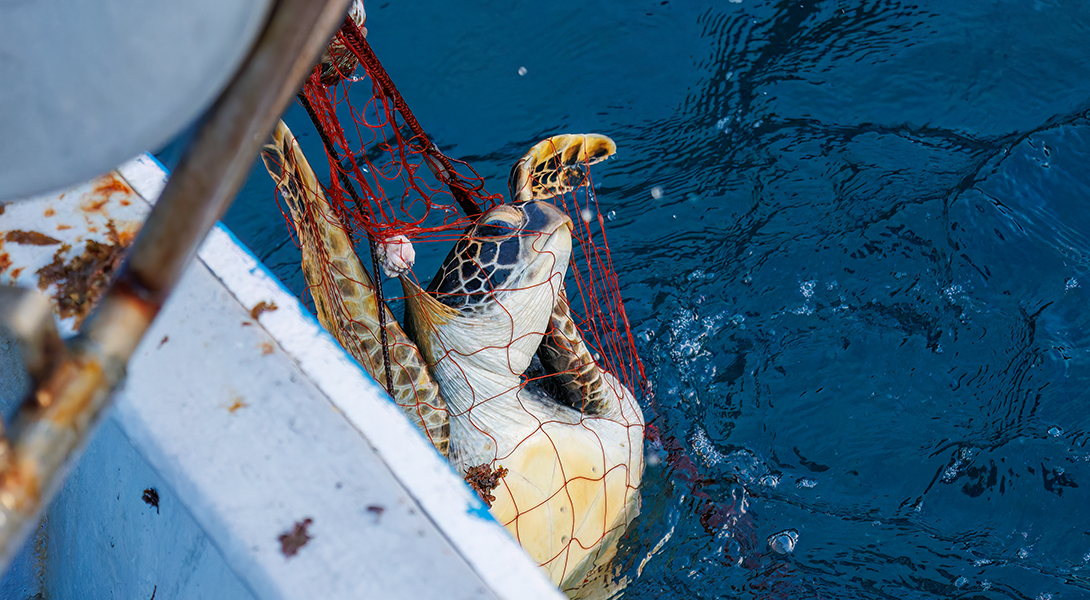
16 June 2026 – World Sea Turtle Day – A new report prepared under the Indian Ocean – South-East Asia (IOSEA) Marine Turtle Memorandum of Understanding, confirms that bycatch – accidental capture in fishing gear – remains a major and widespread threat to sea turtles. Tens of thousands of turtles are likely being lost each year across the region, while major knowledge gaps of mitigation measures persist.
The Sea Turtle Bycatch and Mitigation in the Indian Ocean and South‑East Asia Region report presents results from a 2025 survey of experts, governments and conservation practitioners. It offers a unique snapshot of the current knowledge of fisheries interactions with marine turtles and the status of mitigation efforts.
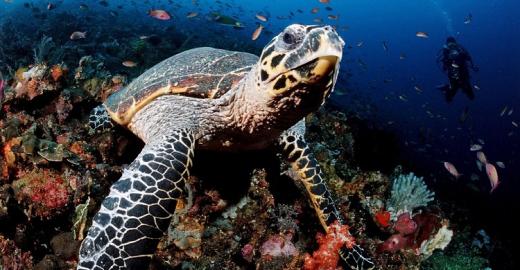
The survey identified green, hawksbill and olive ridley turtles as being the most frequently affected species, with gillnets, trawls and longlines as the most harmful fisheries, responsible for significant mortality through drowning, entanglement and hook injuries.
It also found that more than 40% of the 135 respondents reported not knowing which mitigation measures are in place in their countries, and many could not estimate the scale or species composition of bycatch – highlighting weak monitoring and limited data for decision-making.
Marine turtles are highly migratory species and play a vital role in the oceans helping to maintain balanced marine ecosystems by regulating species populations, supporting seagrass and coral reef habitats, and contributing to nutrient cycling.
“Sea turtles are incredible travellers, crossing oceans from one end to the other. In doing so, they often migrate beyond international borders and through the high seas. This means we need to work collectively towards their regional management, or at least complementarily. What we do in one place can impact how well turtles do somewhere else – they don’t belong to any one country. This report highlights that across much of their range we simply are not doing enough, certainly with regards to bycatch in fisheries, and that we could and should do more” said Dr Nicolas Pilcher, the lead author of the report, and the Lead of the joint Turtle Bycatch Steering Group of the IOSEA Marine Turtle MOU Advisory Committee and the CMS Scientific Council.
Despite the availability of effective solutions, the report finds that mitigation measures remain unevenly applied. Tools such as Turtle Excluder Devices (TEDs), circle hooks, modified gear configurations and improved handling practices are known to significantly reduce turtle mortality but are rarely implemented, and rarely at a meaningful scale.
The complementary Review of Technical and Operational Measures to Mitigate Bycatch of Marine Turtles in Commercial Fisheries (Breimann & Baker, 2026) presented to the Fifteenth Meeting of the Conference of the Parties to the Convention on Migratory Species (CMS COP15) reinforces this message, concluding that practical, well-tested mitigation options already exist for most fisheries. These include gear modifications, changes in fishing practices such as reduced soak times or deeper hook setting, and improved handling and release techniques – all of which can substantially lower bycatch mortality when properly applied.
The survey identifies limited technical capacity, insufficient funding and weak policy implementation as the main obstacles to reducing bycatch. While legal frameworks often exist, enforcement and uptake remain inconsistent. Engagement with fishers and commercial operators – critical to the success of any bycatch mitigation measure – also remains limited in many parts of the region, with conservation efforts still largely driven by NGOs.
Accordingly, the report calls for stronger, coordinated action across the Indian Ocean – South-East Asia region, including scaling up the use of proven mitigation measures, improving monitoring and reporting systems, strengthening policy frameworks, and investing in capacity-building and fisher engagement. Importantly, it stresses that action should not be delayed by knowledge gaps: many effective solutions are already available and can be implemented immediately alongside improved data collection.
Launched on World Sea Turtle Day 2026, the report underscores both the scale of the challenge and demonstrates the need for stronger collaboration amongst all actors and wider adoption of proven measures.
Operating under CMS, the IOSEA Marine Turtle MOU provides a platform for cooperation among countries to conserve marine turtles and their habitats across the Indian Ocean and South‑East Asia. The MOU also engages with regional fisheries management organisations (RFMOs), in particular the Indian Ocean Tuna Commission (IOTC), to promote greater attention to marine turtle bycatch within fisheries processes. This includes contributing technical information, sharing relevant findings, and encouraging the consideration and adoption of mitigation measures through existing RFMO frameworks. While responsibilities for fisheries management remain with RFMOs and national authorities, strengthened collaboration helps improve awareness of bycatch issues, supports alignment between conservation and fisheries agendas, and fosters more consistent uptake of mitigation approaches over time.
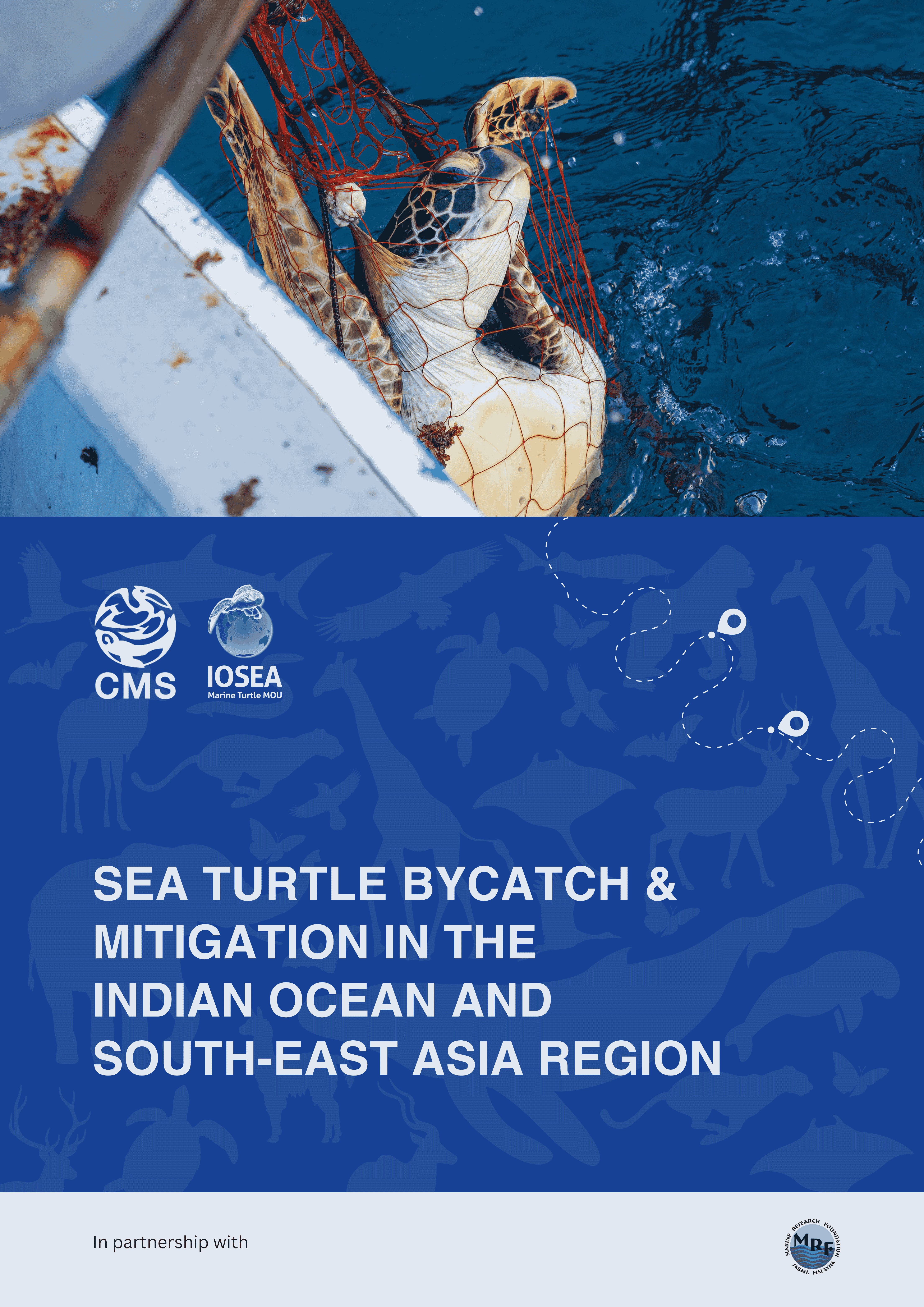
NEW
REPORT
Sea Turtle Bycatch and Mitigation in the Indian Ocean and South‑East Asia Region
More about the IOSEA Marine Turtle MOU
The Memorandum of Understanding on the Conservation and Management of Marine Turtles and their Habitats of the Indian Ocean and South-East Asia, which celebrates its 25th anniversary this year, is an intergovernmental environmental treaty concluded under the auspices of the Convention on the Conservation of Migratory Species of Wild Animals (CMS). It came into effect on 1 September 2001, and the Signatory States held their first meeting in Bangkok in 2003.
The MOU applies to the waters and coastal States of the Indian Ocean and South-East Asia and adjacent seas, extending eastwards to the Torres Strait. This agreement area is considered to cover 44 States of which 36 are to date Signatories to the MOU.
The IOSEA region is host to six out of seven existing species of marine turtles:
- Loggerhead (Caretta caretta)
- Olive ridley (Lepidochelys olivacea)
- Green (Chelonia mydas)
- Hawksbill (Eretmochelys imbricata)
- Leatherback (Dermochelys coriacea)
- Flatback (Natator depressus)
The IOSEA Marine Turtle MOU Secretariat operates from the headquarters of CMS in Bonn, Germany.