
Fact Sheet on Mule Deer Migration
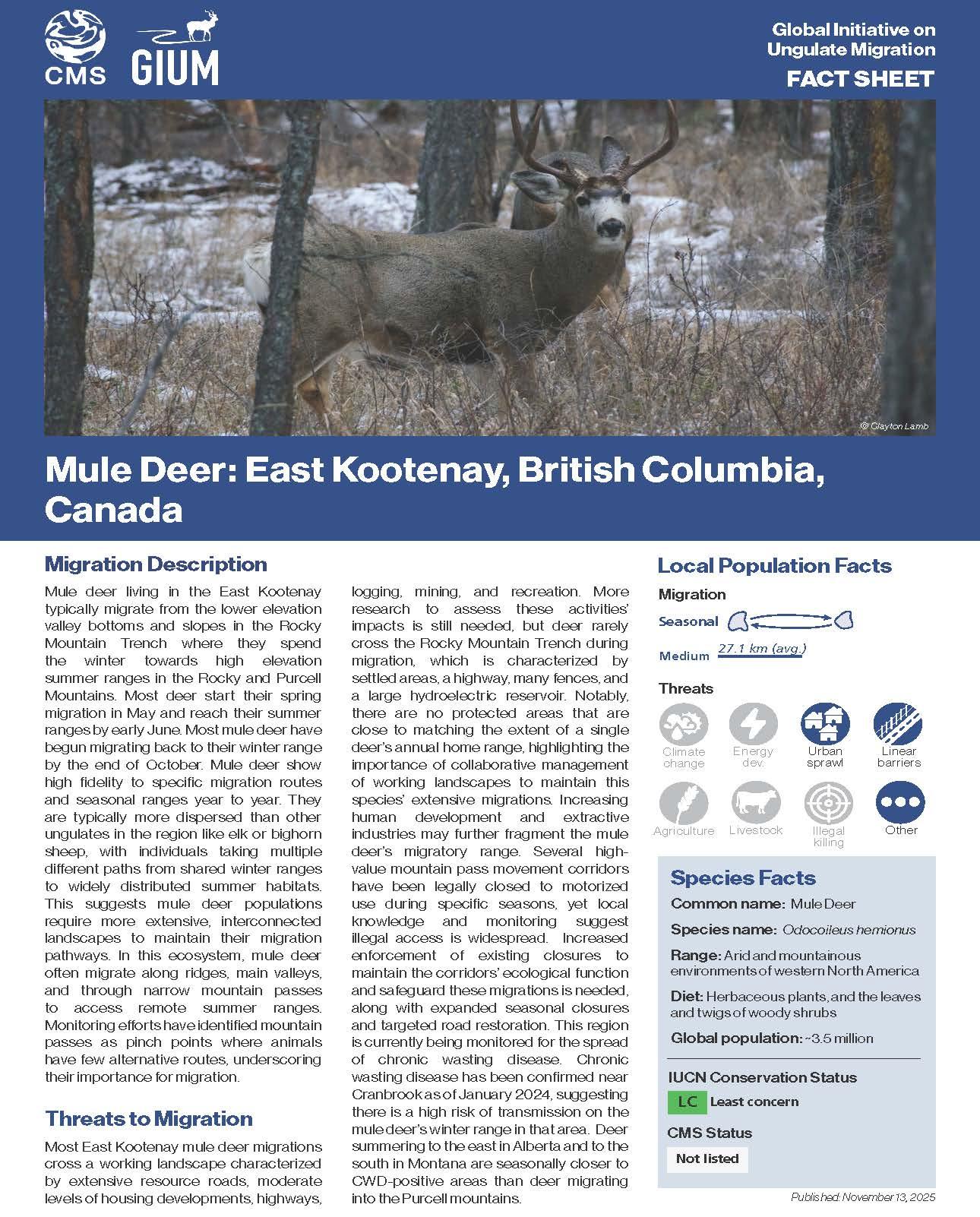
Mule deer living in the East Kootenay typically migrate from the lower elevation valley bottoms and slopes in the Rocky Mountain Trench where they spend the winter towards high elevation summer ranges in the Rocky and Purcell Mountains. Most deer start their spring migration in May and reach their summer ranges by early June. Most mule deer have begun migrating back to their winter range by the end of October. Mule deer show high fidelity to specific migration routes and seasonal ranges year to year. They are typically more dispersed than other ungulates in the region like elk or bighorn sheep, with individuals taking multiple different paths from shared winter ranges to widely distributed summer habitats. This suggests mule deer populations require more extensive, interconnected landscapes to maintain their migration pathways. In this ecosystem, mule deer often migrate along ridges, main valleys, and through narrow mountain passes to access remote summer ranges. Monitoring efforts have identified mountain passes as pinch points where animals have few alternative routes, underscoring their importance for migration.
| Adjunto | Tamaño |
|---|---|
| Fact Sheet on Mule Deer Migration | 2.05 MB |