
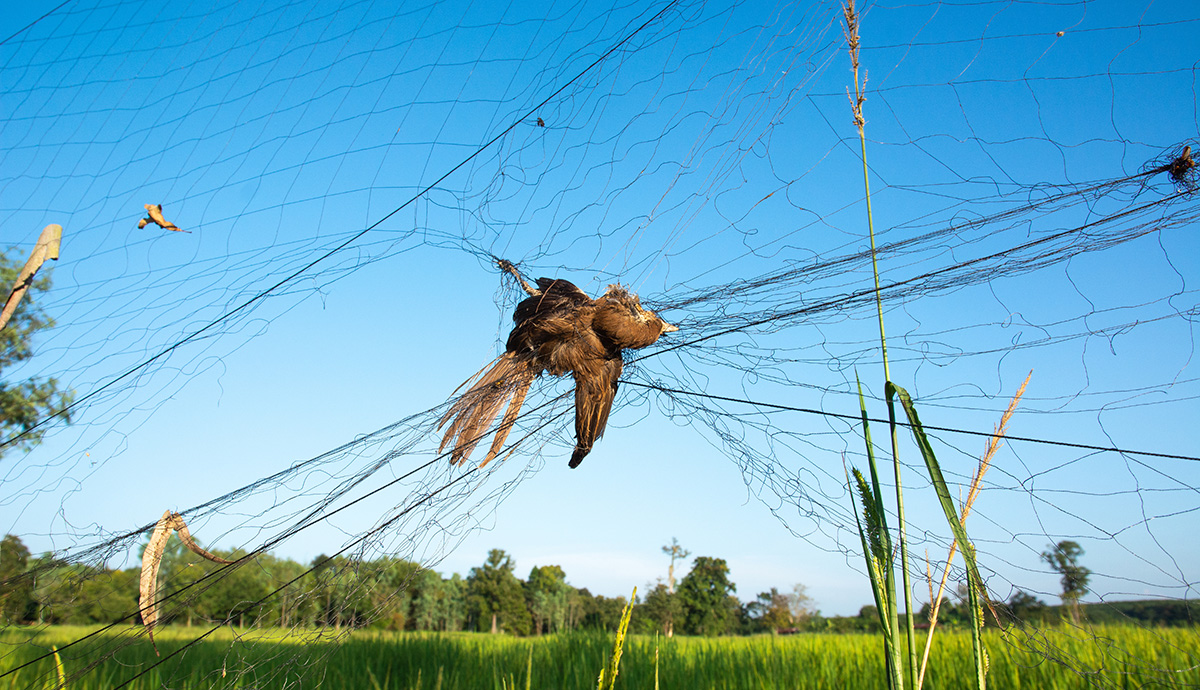
Tackling Asia’s Invisible Bird Trap: Countries Join Forces to Protect Migratory Birds from Mist Nets
Bonn / Bangkok, 26 November 2026 – Across Asia, millions of migratory and resident birds face a largely overlooked threat: mist nets and other types of fine-mesh nets used to protect shellfish farms, or directly for trapping, hunting and deterring wildlife. Brought together by the CMS convention, a dedicated workshop took place recently in Bangkok, Thailand, in November 2026, where government representatives and partners from across the East Asian-Australasian Flyway identified practical ways to reduce this pervasive threat.
Migratory birds travelling along Asian countries play an essential role in dispersing seeds, controlling pest insect and rodent populations throughout their lives and contribute to ecosystem health, and the food security and livelihoods of millions of people. What happens to them in one place affects every place along their migratory route, and mist nets and other nets used for bird trapping are a significant threat and barrier.
Report: at least 375 bird species affected by nets in Asia
A report on the use and impact of nets on wild birds, prepared by BirdLife International for the Convention on Migratory Species (CMS), finds that the scale of net use is far greater than previously documented and may be affecting hundreds of bird species across the region. Drawing on expert surveys, scientific literature, social media investigations and citizen-science observations, the study provides the most comprehensive assessment to date of how nets are used in East, Southeast and South Asia.
Researchers found evidence that at least 375 bird species are affected by nets, including 211 migratory species within the East Asian-Australasian Flyway and 45 globally threatened or near-threatened species. These include landbirds such as the Bengal florican (Houbaropsis bengalensis) and yellow-breasted bunting (Emberiza aureola), and shorebirds like the spoon-billed sandpiper (Calidris pygmaea), great knot (Calidris tenuirostris) and far eastern curlew (Numenius madagascariensis).
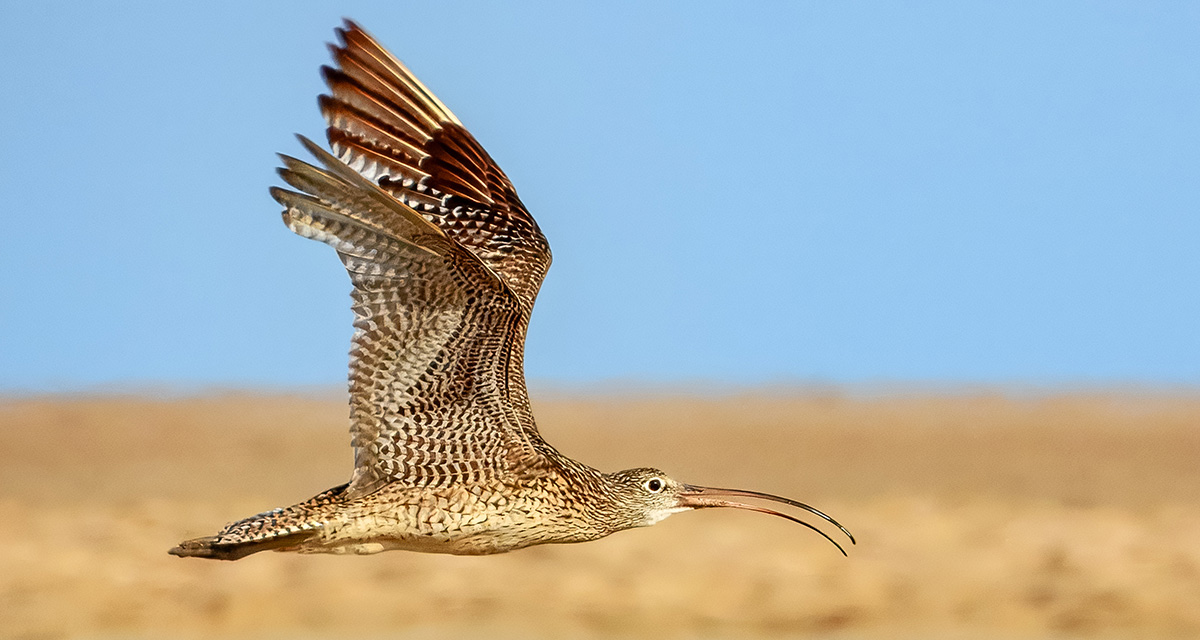
Far Eastern Curlew, one of the birds affected by nets © Adobe Stock Images
Why the true impact is likely underestimated
Mist nets are commonly used to capture birds for food, the cage-bird trade, recreation and religious release practices, while larger nets are also deployed around farms, fish ponds and agricultural areas to deter wildlife. Although often targeting specific species, these methods frequently trap non-target birds, resulting in significant, and often unrecorded, mortality.
The report highlights a major gap in knowledge and regulation. Despite widespread concern among conservationists, only a small number of published studies have examined the impacts of netting on bird populations, suggesting that the true scale of the problem is likely underestimated. Experts surveyed from across Asia reported that netting remains common in many countries and is still frequently used in several parts of the region.
Working together across the East Asian-Australasian Flyway
Addressing such a widespread threat requires cooperation amongst countries, NGOs, scientists, local communities and civil society to ensure that international and national goals and targets on the conservation and sustainable management of migratory birds are achieved. These include Target 3.1 of the Samarkand Strategic Plan for Migratory Species and Target 5 of the Kunming-Montreal Global Biodiversity Framework, which call for any use and trade of wild species to be sustainable, safe and legal, and for impacts on non-target species to be minimized.
To turn this evidence into concrete action the CMS Secretariat convened a Workshop on the Impact of Mist Nets on Migratory Birds in the East Asian-Australasian Flyway in Bangkok, Thailand, on 20–21 November 2026, with support from its partners BirdLife International and King Mongkut's University of Technology Thonburi, Bangkok..
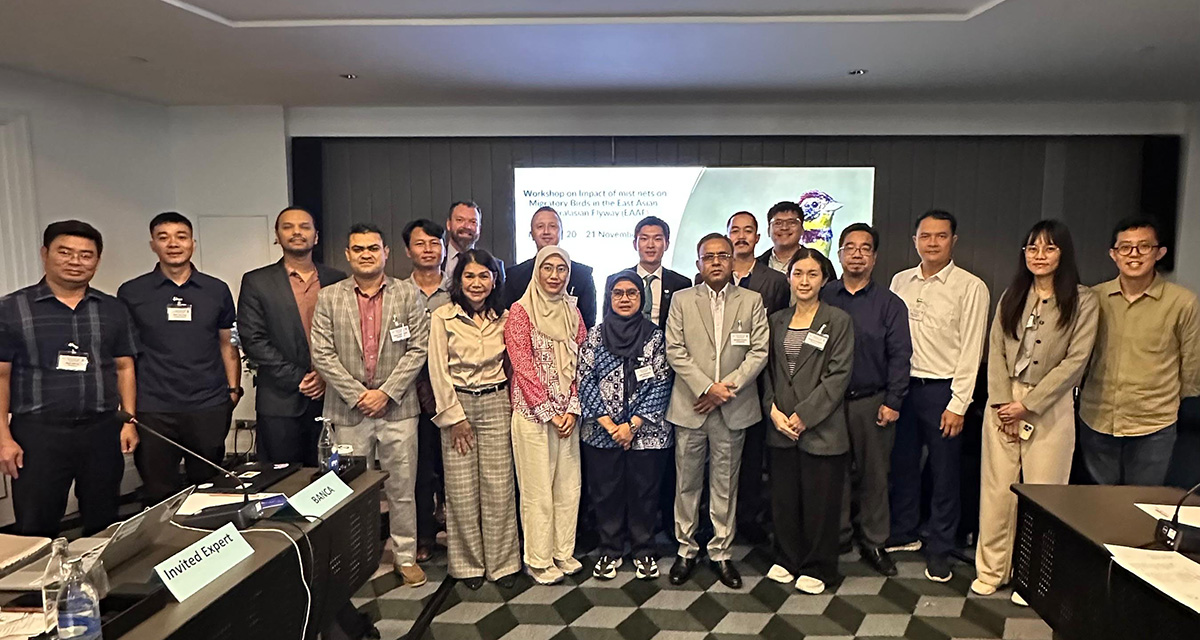
Participants at the Workshop on the Impact of Mist Nets on Migratory Birds in the East Asian-Australasian Flyway, 20-21 November 2026, Bangkok, Thailand.
The workshop was held under the framework of the Asia Pacific Illegal Taking of Migratory Birds Intergovernmental Task Force (ITTEA), and funded by the Government of Australia. It brought together 20 participants including representatives of five governments, international organizations, NGOs and technical experts from across the flyway to examine the threat posed by mist nets and other trapping devices.

Workshop participants discussed how countries along the East Asian-Australasian Flyway can work together to protect migratory birds from mist nets.
Building on the evidence presented, participants shared national experiences and identified effective policy and enforcement responses. They improved their understanding of regional hotspots as well as how they are identified, and of regional trends, and strengthened cooperation among countries that share migratory bird populations. The meeting played an important role in translating research findings into coordinated conservation action, helping countries monitor, regulate and reduce the impacts of mist netting on migratory birds more effectively throughout the flyway.
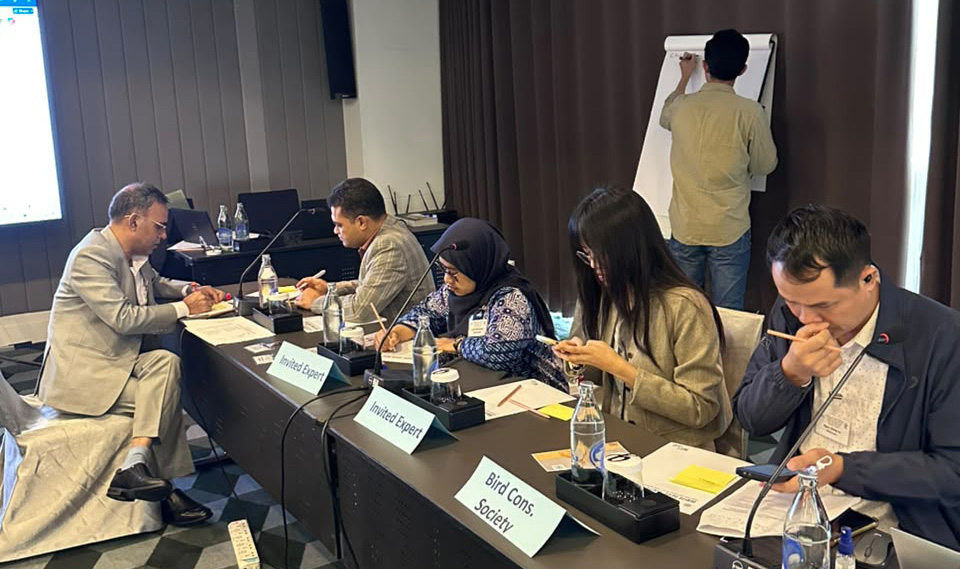
Participants at the Workshop on the Impact of Mist Nets on Migratory Birds in the East Asian-Australasian Flyway, 20-21 November 2026, Bangkok, Thailand.
"One of the clearest messages from this Workshop is that mist net use is a shared challenge across the East Asian-Australasian Flyway. While the circumstances differ from country to country, we face many of the same issues, including limited data, online trade in mist nets, and the need for practical alternatives for farmers and local communities. By working together on using common monitoring approaches and sharing experiences, we can achieve far greater conservation impact than acting alone.” - Dr. Md. Zaglul Hossain, Deputy Chief Conservator of Forests from Bangladesh, Chair of the meeting
Next steps: national roadmaps and a new self-assessment tool
The workshop’s outcomes will significantly support determining national roadmaps for eliminating threats posed by trapping by mist and other nets and foster the international cooperation to achieve common conservation goals.
As one particular practice-oriented activity, a new monitoring framework was made available and tested as a voluntary self-assessment tool for countries to measure their own progress in addressing illegal taking of migratory birds at national level.Its implementation sets a foundation for establishing regional trends over time, which will help to further determine needs of relevant authorities and agencies leading the work on this issue.
“Many countries in the region have got dedicated initiatives and programmes to address wildlife crime, including the illegal take of birds. We however do need a comprehensive monitoring framework to help countries measure progress, and guide the development of next steps to tackle the issue. In developing this framework, we have done a lot of thinking to come up with a list of indicators to measure, and hopefully covers the full range of metrics to be considered.”- Ding Li Yong, Head of Flyways & Species Conservation (Asia), BirdLife International
"The workshop findings demonstrate that the impacts of mist nets and other nets used for trapping on migratory birds are not confined to any single country but represent a challenge across the East Asian-Australasian Flyway. Encouragingly, participants identified several areas where regional cooperation can deliver tangible results together with the use of a self-monitoring Scoreboard, including addressing online sales of mist nets, harmonizing monitoring approaches, and promoting effective alternatives that reduce bird mortality. These outcomes provide a strong foundation for coordinated action under the Convention on Migratory Species in the region." - Dr. Mark Carey, Vice-Chair of the CMS Working Group on Flyways

Dr. Mark Carey, Vice-Chair of the CMS Working Group on Flyways, with workshop participants.
Find out more
- Report: Assessing the Use and Impact of Nets on Wild Bird Populations in Asia and the Mediterranean (UNEP/CMS/COP15/Inf.26.1b)
- Workshop on the Impact of Mist Nets on Migratory Birds in the East Asian-Australasian Flyway
- Asia Pacific Illegal Taking of Migratory Birds Intergovernmental Task Force (ITTEA)
- Mock assessment using the self-assessment monitoring framework