
Ecological Connectivity
❓ What is Ecological Connectivity?
Ecological connectivity is an essential part of nature. It is necessary for the functionality of ecosystems, is key for the survival of wild animals and plant species and is crucial to ensuring genetic diversity and adapting to climate change across all biomes and spatial scales. While not being a new conservation topic, ecological connectivity has not been effectively reflected or implemented in the global biodiversity strategy that concluded in 2020.
A definition for ecological connectivity was developed in 2019, in the context of a series of meetings convened by the CMS Secretariat to identify CMS priorities for the post-2020 Global Biodiversity Framework:
Definition
“Ecological Connectivity is the unimpeded movement of species and the flow of natural processes that sustain life on Earth.”

☀️ Why Is Ecological Connectivity Important?
The concept and the role of ecological connectivity has become increasingly important in the past decades due to habitat modifications, such as overexploitation and fragmentation that have led to the consequent decline of biodiversity. It is an important planning tool for governments to achieve the 2030 Agenda for Sustainable Development, in order to achieve economic, development and environmental goals.
Connectivity conservation (maintaining, enhancing or restoring connectivity) is a direct response to the destruction and fragmentation of vegetation, habitats and loss of Earth’s species. It is a key tool for the safeguard and management of habitats, biodiversity and ecosystem functions such as migration, hydrology, nutrient cycling, pollination, seed dispersal, food security, climate resilience and disease resistance. (IUCN, 2020).
Ecological Connectivity in the IPBES Global Assessment
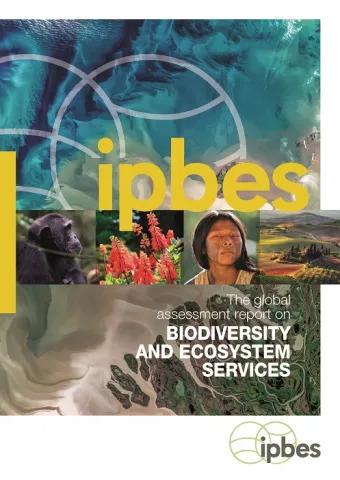
The Global Assessment on Biodiversity and Ecosystem Services released by Intergovernmental Science-Policy Platform on Biodiversity and Ecosystem Services (IPBES) in 2019 revealed that maintaining and designing connectivity are essential for the functioning of many ecological systems and processes and highlighted how mainstreaming connectivity into economic growth and development is essential to achieve the 2030 Agenda.
The report also found that:
The assessment noted that connectivity should play a greater role in a new strategic framework for biodiversity.
Ecological Connectivity and SDGs


SDG9
Industry, innovation and infrastructure
Infrastructure development is considered one of the key steps toward economic advancement, although it is cause of fragmentation of ecologically rich landscapes, biodiversity loss, reduced specie richness and diversity at different scales. The planning and deployment of infrastructures need to consider their ecological footprints by maintaining the connections among the different elements of the landscape.
SDG11
Sustainable Cities and Communities
The spatial expansion of urban settlements and the rapid growth of urban populations demand efforts to strengthen cities’ resilience and sustainability which strictly depend on the role of functioning ecosystems in cities. The connectivity of urban green spaces promotes their ecological functionality and the ecosystem services associated with it.
SDG12
Responsible consumption and production
Connectivity supports ecosystems and species that underpin agricultural productivity, fisheries and other natural resources that provide for food, livelihoods and economic benefits.

SDG13
Climate Action
Connectivity improves the capacity of ecosystems to adapt to climate change -the distribution of species is expected to change due to global warming: if species are able to move and follow more favourable climates and shifting habitats, they can better adapt to climate change.
SDG14
Life Below Water
Considering connectivity among marine protected areas is key to avoid inconsistencies in management across and beyond national jurisdictions and is a key feature to maintain biodiversity persistence.
SDG15
Life on Land
When defining conservation strategies, connectivity is key for the identification and planning of networks of protected areas or other area-based management tools but also for assessing the functional need for ecological corridors connecting different sites.
Ecological Connectivity and MEAs

Ecological Connectivity is key for the achievement of the objectives of many Multilateral Environment Agreements (MEAs).

| Convention on Migratory Species (CMS)In the CMS context, the concept of ecological connectivity also includes:
|

|
|

| Ramsar Convention on WetlandIn the context of Ramsar, ecological connectivity includes:
|

| United Nations Convention to Combat Desertification (UNCCD)In the context of the UNCCD, ecological connectivity includes:
|

| United Nations Framework Convention on Climate Change (UNFCCC)In the context of the UNFCCC, ecological connectivity includes:
|

| United Nations Educational, Scientific and Cultural Organization (UNESCO)In the context of the UNESCO, ecological connectivity includes:
|
🌍 Migratory Species and Connectivity
Migratory species represent perhaps the most vulnerable ecological elements on the planet as they depend entirely on a network of well-functioning natural areas to feed, reproduce and survive in every “station” as part of their life cycles.
Connectivity is key for the identification and planning of the spatial structure of networks of sites (protected areas and other sites) managed for conservation purposes which support this functional need.
Across the globe they run, they fly, they swim. Migratory species connect sites and habitats in different countries which share the responsibility to conserve them. These habitats and sites are at risk due to direct and indirect anthropogenic threats that compromise the ecological, spatial and functional aspects of connectivity. Maintaining and restoring Ecological Connectivity is therefore fundamental for ensuring the survival of migratory species.
The Strategic Plan for Migratory Species 2015-2023 calls for taking a migration system approach into conservation strategies which give holistic attention not only to populations, species and habitats, but to the entire span of migration routes and the functioning of the migration process. The Plan further emphasizes that the multi-dimensional connectedness of migratory species gives them a special role as ecological keystone species and as indicators of the linkages between ecosystems and of ecological change, while also exposing these species to special vulnerabilities.
A number of the Targets in the Strategic Plan make specific reference to this issue including Target 9, which concerns the application of a migration systems approach in cooperative activities between States, and Target 10, which concerns the adoption of a functional basis for area-based conservation measures.
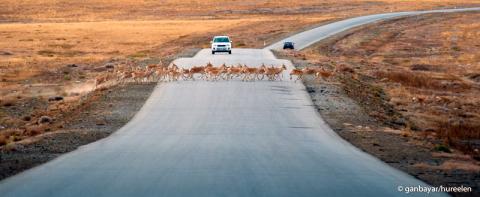
THEY RUN
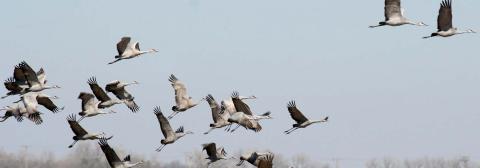
THEY FLY

THEY SWIM
📄 CMS Mandate
CMS and its Family Agreements have been providing the primary specialized intergovernmental framework for cooperative efforts on the issue of ecological connectivity in relation to migratory species conservation needs.
The Convention has taken a number of steps to enhance understanding and delivery in this area in recent years. Resolution 10.3 on The Role of Ecological Networks in the Conservation of Migratory Species, which was adopted in 2011, advocated the selection of areas for conservation in such a way as to address the needs of migratory species throughout their migratory ranges; and to set network-scale objectives for the conservation of migratory species.
In 2014, Resolution 11.25 on the same topic, further urged that consideration be given to ways in which connectivity can contribute to the elimination of obstacles to migration, including disturbance, habitat fragmentation and discontinuities in habitat quality and made clear the scope of the work that remains to be done to realize more fully the application of evolving insights on connectivity in implementation of the CMS and of the Strategic Plan for Migratory Species.
Over the years, the evolution of recent thinking on migratory species connectivity issues has drawn particular attention to:
- the need to express conservation objectives in terms of what is needed for the functioning of the migration process itself, not just the status of populations or habitats;
- the opportunity to define actions addressed at the connections between places (or times);
- the opportunity to improve connectivity by correcting instances of discontinuity in migration systems, such as fragmented resources, disrupted ecological processes, genetic isolation, altered behaviour patterns, disconnections in distribution caused by climate change or depletion of food or water resources, inconsistencies in management across and beyond national jurisdictions, and other factors;
- the need to work with a wide range of stakeholders in government authorities, local communities, the private sector and others at a variety of scales including the landscape and seascape scale to promote the restoration and management of habitats used by migratory species with particular regard to issues of connectivity;
- the importance of developing understanding about the links between connectivity and resilience.
The CMS COP further strengthened attention to connectivity through Resolution 12.26 on Improving Ways of Addressing Connectivity in the Conservation of Migratory Species, and Resolution 12.7 on The Role of Ecological Networks in the Conservation of Migratory Species.
In February 2020, COP13 built on this mandate in Resolution 12.7 (Rev.COP13) which calls for strengthening the application of the concept of Transfrontier Conservation Areas, as a tool for transboundary efforts;
Resolution 12.26 (Rev.COP13) and Decisions 13.113-13.115 focus on better supporting the implementation of connectivity-based measures on the ground following newly available guidance.
The view from space can provide such clarity on how all natural systems are deeply interconnected and support the most precious thing in the universe - Life!
Astronaut of ESA & Commander of the International Space Station
🛣️ Connectivity in the Post-2020 Global Biodiversity Framework

The formal process to develop the post-2020 global biodiversity framework, established under the Convention on Biological Diversity (CBD), set out a comprehensive consultation process, including various requests for written submissions and provisions for global, regional and thematic consultation meetings.
Since 2017, the CMS Secretariat has undertaken a large array of activities to promote connectivity in collaboration with multiple partners.
The 48th Meeting of the CMS Standing Committee (Bonn, October 2018) endorsed the establishment of a Working Group (WG) dedicated to guide the development of the CMS Family contributions to the post-2020 Global Biodiversity Framework established under the CBD. The WG recognized that the conservation needs of migratory species can be best represented in the future global biodiversity framework through the concept of connectivity.
COP13 endorsed the Gandhinagar Declaration on CMS and The Post-2020 Global Biodiversity Framework, which outlines the CMS Priorities for the framework and reflected the key messages resulted from the COP13 High-Level Segment being focused on the importance of connectivity for the post-2020 framework.
CMS Parties, partners and the Secretariat participated in all the phases, consultations and major events related the development of the framework and made formal submissions to promote the inclusion of ecological connectivity and other priorities related to migratory species conservation including through proposing a standalone target on connectivity:
- In response to CBD Notification 2018/063, CMS provided the preliminary CMS Family views on the development of the Post-2020 Global Biodiversity;
- In response to CBD Notification 2019/075, CMS provided Inputs for the development of the Post-2020 Global Biodiversity Framework;
- Following the publication of the Zero Draft of the post-2020 Global Biodiversity Framework in January 2020, CMS produced an addendum to Doc.17 on CMS Contribution to the post-2020 Global Biodiversity Framework, which provided an update on CMS Priorities for the Post 2020 Global Biodiversity Framework and Preliminary Views on Zero Draft and Indicators;
- In response to CBD Notification 2020-045, CMS provided inputs to the draft monitoring framework for the post-2020 global biodiversity framework;
🔗 Connectivity in Other Relevant Processes and Events
Beyond the Post-2020 Global Biodiversity Framework, connectivity is also being addressed in various other processes and events:
- 7th session of the Plenary of IPBES (2019)

In July 2018, the Multidisciplinary Expert Panel (MEP) and the Bureau of the IPBES issued a call for requests, inputs and suggestions on short-term priorities and longer-term strategic needs that require attention and action by IPBES as part of its future work programme, in line with decision IPBES-5/4. The CMS Secretariat, in consultation with the CMS Scientific Council and Standing Committee, submitted proposal for an assessment on connectivity to IPBES on behalf of the CMS Family, and together with the World Heritage Convention (WHC).
The assessment was prioritized by the IPBES MEP and the Bureau but was not recommended for the initial round of assessments included in the work programme which was adopted by the IPBES-7 Plenary. Based on the request from the Secretariats of CMS and the WHC and their interventions during IPBES-7 Plenary, together with other similar requests on the topic of connectivity from the United Nations Convention to Combat Desertification (UNCCD) and other governments and non-governmental organizations, the IPBES-7 Plenary agreed on the following:
- To reconsider the assessment on connectivity at its ninth session in 2022;
- To look at, among other aspects, the role of connectivity in ensuring integrity and resilience in socioecological systems in the thematic assessment of the interlinkages among biodiversity, water, food and health (“nexus assessment”).
The Secretariat, together with the Chair of the Scientific Council, provided inputs and engaged in the scoping processes of the nexus assessment as well as in the thematic assessment of the underlying causes of biodiversity loss, determinants of transformative change and options for achieving the 2050 vision for biodiversity (“transformative change assessment”).
- United Nations High Level Summit on Biodiversity (2020)
United Nations High Level Summit on Biodiversity (30 September 2020, New York)
The Gandhinagar Declaration was officially transmitted to the Summit. The CMS Executive Secretary, Ms. Amy Fraenkel, addressed the Summit through a video statement.
In her video, Ms. Fraenkel notes the need to reverse the loss of wild species including migratory species, and to stop the overexploitation of nature, which would in turn reduce the risk of future outbreaks of infectious zoonotic diseases. She notes that human health, economic well-being, and the protection of nature are interconnected, laying the foundation for moving onto a new path.
Ms. Fraenkel also issued an Op-ed on the occasion of the Summit which was published by InDepthNews
- IUCN World Conservation Congress (2021)
World Conservation Congress of the International Union for Conservation of Nature (IUCN) (2021)
The CMS Secretariat, in cooperation with numerous partners, promoted the importance of connectivity for the post-2020 framework through the submission of a proposal for a motion on Ecological Connectivity conservation in the Post-2020 Global Biodiversity Framework to the IUCN World Conservation Congress that will take place in 2021.
The motion was adopted by electronic vote and already entered into force as IUCN policy as of late October. The approved motion has been reclassified as Resolution 073 Ecological connectivity conservation in the post-2020 global biodiversity framework: from local to international levels.
- UNFCCC COP26 (2021)
The Gandhinagar Declaration was officially transmitted to the meeting.
- 75th Session of the UN General Assembly (2021)
The Seventy-fifth regular session General Assembly of the United Nations,
On April 16, 2021, during its 75th session, the UN General Assembly adopted Resolution 75/271 entitled "Nature knows no borders: transboundary cooperation – a key factor for biodiversity conservation, restoration and sustainable use". Initially sponsored by Kyrgyzstan, the Resolution was eventually co-sponsored by sixty additional countries and passed by consensus.
The Resolution marks the first UN General Assembly decision on international and transboundary cooperation for the conservation and restoration of biodiversity. With this Resolution, the General Assembly recognizes the importance of maintaining and enhancing ecological 'connectivity' between habitats and ecosystems by elevating it to a priority, for the first time at such a high decision-making level. All members are urged to increase international cooperation to maintain and enhance connectivity of transboundary habitats, cross-border protected areas, vulnerable ecosystems, and ecosystems that are a range of a specific species.
🍃 Connectivity and Ecosystem Restoration
The persistent loss of natural habitats leads to fragmentation and further to landscape "patchiness" and isolation with distinct habitat "islands". When these habitat islands lose their ecological functionality, essential ecological processes can no longer take place and migration to other habitats is no longer possible. Therefore, the conservation of biological diversity and the improvement of ecosystem services must go beyond the approach of self-contained restoration sites or static protected areas. An improvement of the ecological continuum is needed in order to mitigate the effect of change in land use and climate change.
The UN Decade for Ecosystem Restoration 2020-2030 brings attention to scaling up the restoration of degraded and destroyed ecosystems as a proven measure to fight the climate crisis and enhance food security, water supply and biodiversity. Ecological Connectivity and Ecosystem Restoration are interdependent: retaining or reinstating connectivity is crucial to securing healthy, resilient and sustainable ecosystems while restoring degraded habitat is a key management tool for improving connectivity in the landscape.
📚 Resources
- UN Resolutions
Resolution 75/271 on "Nature knows no borders: transboundary cooperation – a key factor for biodiversity conservation, restoration and sustainable use" which calls for maintaining and enhancing international cooperation and ecological connectivity for the conservation of biodiversity
- CMS Documents and Publications on Connectivity
Resolutions
- Resolution 12.7 (Rev.COP13) which calls for strengthening the application of the concept of Transfrontier Conservation Areas, as a tool for transboundary efforts;
- Resolution 12.26 (Rev.COP13) and Decisions 13.113-13.115 focusing on better supporting the implementation of connectivity-based measures on the ground following newly available guidance.
Documents and Publications
- Rethinking Ecological Connectivity – A pathway towards living in harmony with Nature (April 2021). A publication developed in partnership with CMS, UNESCO and POST2020 Biodiversity Framework EU Support
- Migratory Animals Connect the Planet: the Importance of Connectivity as a Key Component of Migration Systems and a Biological Basis for Coordinated International Conservation Policies (CMS/COP12/Inf.Doc.20) compiles a series of articles on connectivity and migratory species based on available scientific data and evidence which prove the importance of connectivity as a key component of migration systems and a biological basis for coordinated international conservation policies;
- Ecological Networks: Case studies, Challenges and Lessons Learned (CMS/COP11/Inf.Doc.21) which compile chase studies on how ecological networks benefit migratory species;
- Living Planet Connected Planet: preventing the end of the world’s wildlife migrations through ecological Network – A rapid Assessment.
CMS Fact Sheets
- Connectivity on the ground - Guidelines and other tools:
- IPBES (2019): Summary for policymakers of the global assessment report on biodiversity and ecosystem services of the Intergovernmental Science-Policy Platform on Biodiversity and Ecosystem Services. S. Díaz, J. Settele, E. S. Brondízio E.S., H. T. Ngo, M. Guèze, J. Agard, A. Arneth, P. Balvanera, K. A. Brauman, S. H. M. Butchart, K. M. A. Chan, L. A. Garibaldi, K. Ichii, J. Liu, S. M. Subramanian, G. F. Midgley, P. Miloslavich, Z. Molnár, D. Obura, A. Pfaff, S. Polasky, A. Purvis, J. Razzaque, B. Reyers, R. Roy Chowdhury, Y. J. Shin, I. J. Visseren-Hamakers, K. J. Willis, and C. N. Zayas (eds.). IPBES secretariat, Bonn, Germany. 56 pages
- Secretariat of the Convention on Biological Diversity (2020) Global Biodiversity Outlook 5. Montreal.
- UNEP (2019), ’Ecological connectivity: A bridge to preserving biodiversity’ in Frontiers 2018/2019: Emerging Issues of Environmental Concern. pp 24-37, United Nations Environment Programme, Nairobi.
- Lausche, Barbara, David Farrier, Jonathan Verschuuren, Antonio G. M. La Viña, Arie Trouwborst, Charles-Hubert Born, Lawrence Aug (2013). The Legal Aspects of Connectivity Conservation. A Concept Paper, IUCN, Gland, Switzerland. xxiv + 190 pp.
- FAO; IUCN (2017) Study Report: identification of spatial priorities for the re-opening of wetlands to maintain the water flow required for ecological functioning, biological connectivity and habitat maintenance
- Scientific Papers
- Bertassello, L.E., Aubeneau, A.F., Botter, G. et al. Emergent dispersal networks in dynamic wetlandscapes. Sci Rep 10, 14696 (2020). https://doi.org/10.1038/s41598-020-71739-8
- Dunn, D et al., 2019. The importance of migratory connectivity for global ocean policy. Proceedings of the Royal Society B Volume 286 Issue 1911. https://doi.org/10.1098/rspb.2019.1472.
- Gómez et al., 2018. Conectividad de los ecosistemas entre las reservas de la biosfera “El Cielo” y “Sierra del Abra Tanchipa” en México. Investigaciones Geográficas 70, 181–196. https://doi.org/10.14198/INGEO2018.70.09
- Guevara, S., Laborde, J., 2008. The Landscape Approach: Designing New Reserves for Protection of Biological and Cultural Diversity in Latin America. Environmental Ethics 30(3), 251–262. https://doi.org/10.5840/enviroethics200830331
- Habib, Bilal & Rajvanshi, Asha & Mathur, Vinod & Saxena, Akanksha. (2016). Corridors at Crossroads: Linear Development-Induced Ecological Triage As a Conservation Opportunity. Frontiers in Ecology and Evolution. 4. https://doi.org/10.3389/fevo.2016.00132
- Jongman, R.H.G., 2018. Connectivity and Ecological Networks. In: Fath, B.D. (editor in chief) Encyclopedia of Ecology, 2nd edition, vol. 1, pp. 366–376. Oxford: Elsevier. https://doi.org/10.1016/B978-0-12-409548-9.10619-0
- Keeley Annika T.H., Beier Paul, Jenness Jeff S., (2021), Connectivity metrics for conservation planning and monitoring, Biol. Conserv., Volume 255, https://doi.org/10.1016/j.biocon.2021.109008
- Maxwell, S.L., Cazalis, V., Dudley, N. et al. Area-based conservation in the twenty-first century. Nature 586, 217–227 (2020). https://doi.org/10.1038/s41586-020-2773-z
- McRae BH, Hall SA, Beier P, Theobald DM. (2012) Where to restore ecological connectivity? Detecting barriers and quantifying restoration benefits. PLoS One;7(12):e52604. https://doi.org/10.1371/journal.pone.0052604
- Morin, D. J., Fuller, A. K., Royle, J. A., and Sutherland, C.. (2017). Model‐based estimators of density and connectivity to inform conservation of spatially structured populations. Ecosphere 8(1) https://doi.org/10.1002/ecs2.1623
- Saleh, A., Laradji, I.H., Konovalov, D.A. et al. 2020. A realistic fish-habitat dataset to evaluate algorithms for underwater visual analysis. Sci Rep 10, 14671. https://www.nature.com/articles/s41598-020-71639-x
- Saura et al., (2017) Protected areas in the world’s ecoregions: how well connected are they? Ecol. Indic., 76 (2017), pp.144-158 https://doi.org/10.1016/j.ecolind.2016.12.047
- Saura et al., 2018. Protected area connectivity: Shortfalls in global targets and country-level priorities. Biological Conservation 219, 53–67. https://doi.org/10.1016/j.biocon.2017.12.020
- Saura, S. et al. (2019).Global trends in protected area connectivity from 2010 to 2018. Biol. Conserv. 238, 108183 https://doi.org/10.1016/j.biocon.2019.07.028
- Ward, M., Saura, S., Williams, B. et al. Just ten percent of the global terrestrial protected area network is structurally connected via intact land. Nat Commun 11, 4563 (2020). https://doi.org/10.1038/s41467-020-18457-x
- Xu, Y., Si, Y., Wang, Y., Zhang, Y., Prins, H. H. T., Cao, L., and de Boer, W. F.. 2019. Loss of functional connectivity in migration networks induces population decline in migratory birds. Ecological Applications 29( 7):e01960.10.1002/eap.1960
- Media
CMS News, Press Releases and OP-ed
- Opinion by Amy Fraenkel and Marco Lambertini: COP15: We are Losing Nature – Biodiversity – at the Fastest Rate in Human History (5/12/2022)
- IUCN-World Commission on Protected Areas Publishes Guidelines for Conserving Connectivity (8/07/2020)
- High-level Dialogue to Feed into Post-2020 UN Biodiversity Meeting (16/02/2020)
- Ecological Connectivity to Be Focus of CMS COP13 in India (10/02/2020)
Articles
- Mongabay - Helping wildlife navigate road and railway infrastructure (3/1/2023)
- The Guardian – How creating wildlife crossings can help reindeer, bears and even crabs (23/01/2021)
- Mongabay – World’s protected areas lack connections, recent study finds (01/10/2020 )
- South Africa Today - An interview with Michael Goulding (11/09/2020 )
- LeNouvelliste -Les infrastructures naturelles, moteur économique et d’adaptation à la crise climatique (05/092020)
- New Straits Time - Corridors between habitat areas can reduce roadkill (02/092020)
- Mongabay - In the fight against biodiversity loss, connectivity is key (12/08/2020)
- Interesting engineering -29 of the Most Heartwarming Wildlife Crossings Around the World (06/05/2020)
- The Skimmer – Ecological Connectivity between the high seas and coastal waters: why coastal communities need to care about what happens on the high seas (10/06/2019)