

Climate Change and Migratory Species
Climate change poses urgent and complex challenges for migratory animals. As temperatures rise, weather patterns shift, sea levels increase, and extreme weather events become more frequent, the habitats and behaviours of migratory species are being altered in unprecedented ways; migration routes shift, breeding and feeding grounds become unsuitable, and environmental cues that trigger movement are disrupted. These pressures, compounded by other threats such as habitat destruction and overexploitation, heighten the risk of population declines or even extinction.
At the same time, migratory species play a vital role in maintaining healthy and resilient ecosystems and contribute to climate change mitigation by serving as critical links within and across ecological networks. Large mammals such as elephants and yaks can enhance carbon storage through the decomposition of their faeces, which locks carbon into soils. Other species, including sand tiger sharks and dugongs, support carbon sequestration indirectly by maintaining trophic webs and grazing dynamics that sustain forests and seagrass beds and thereby improve ecosystem resilience.
The Convention on Migratory Species (CMS) provides an international framework for coordinated action to address the impacts of climate change on migratory species, grounded in the best available science and policy making. Through this framework, Parties cooperate and share information and expertise to improve the understanding of climate change impacts and to inform international and national decision-making.
Building on this foundation, CMS and its associated instruments support the implementation of management approaches that enhance the resilience of vulnerable species, including nature-based solutions that conserve migratory habitats by maintaining or enhancing connectivity and ecosystem integrity.
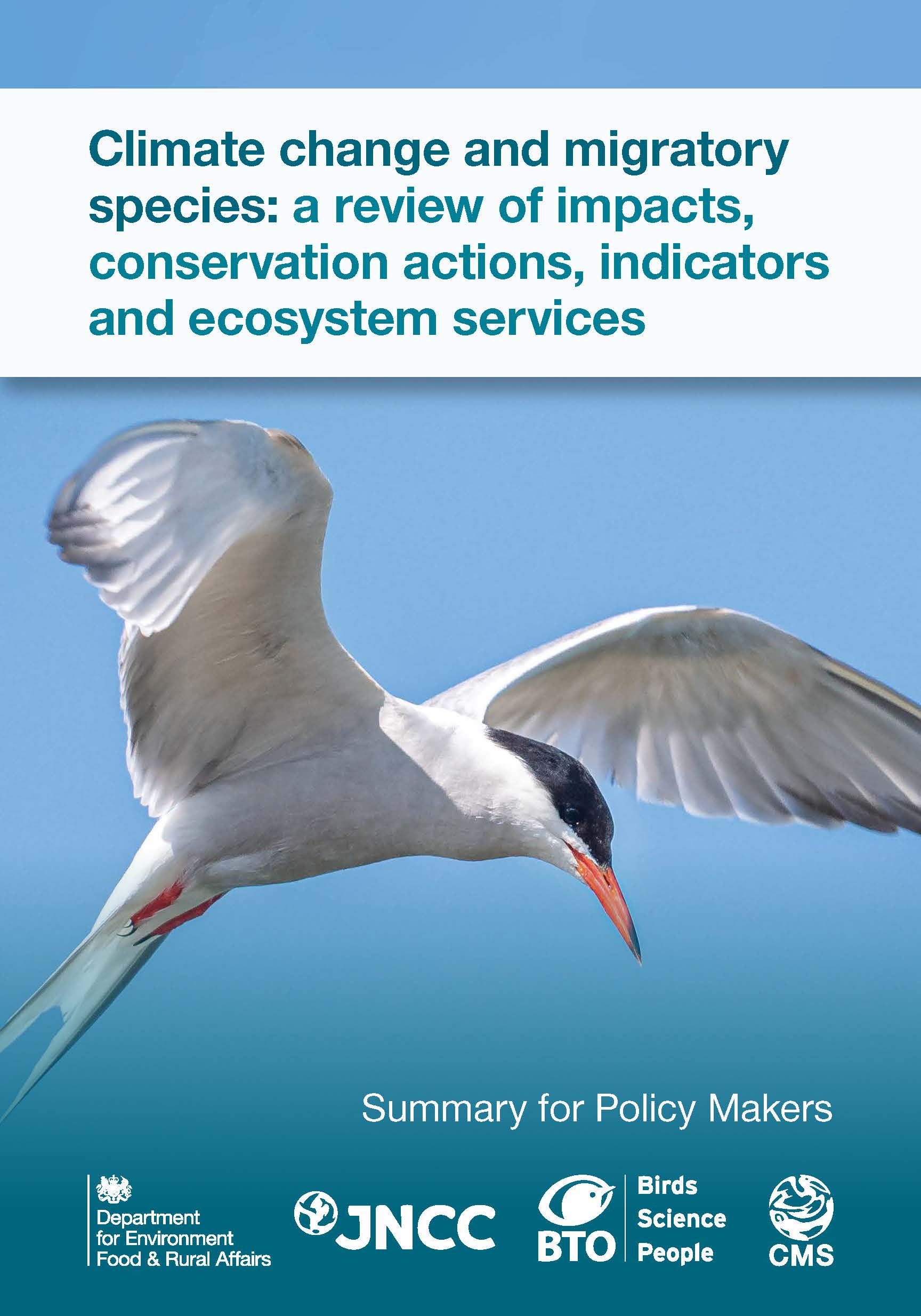
CMS published ‘Climate change and migratory species: a review of impacts, conservation actions, indicators and ecosystem services’ (2023) giving a comprehensive overview of scientific and policy issues related to climate change, including its consequences for migratory species and the role migratory species play in ecosystem functioning and climate change mitigation.
TECHNICAL SERIES REPORT
Climate change and migratory species: a review of impacts, conservation actions, indicators and ecosystem services
Impacts of Climate Change and Migratory Species
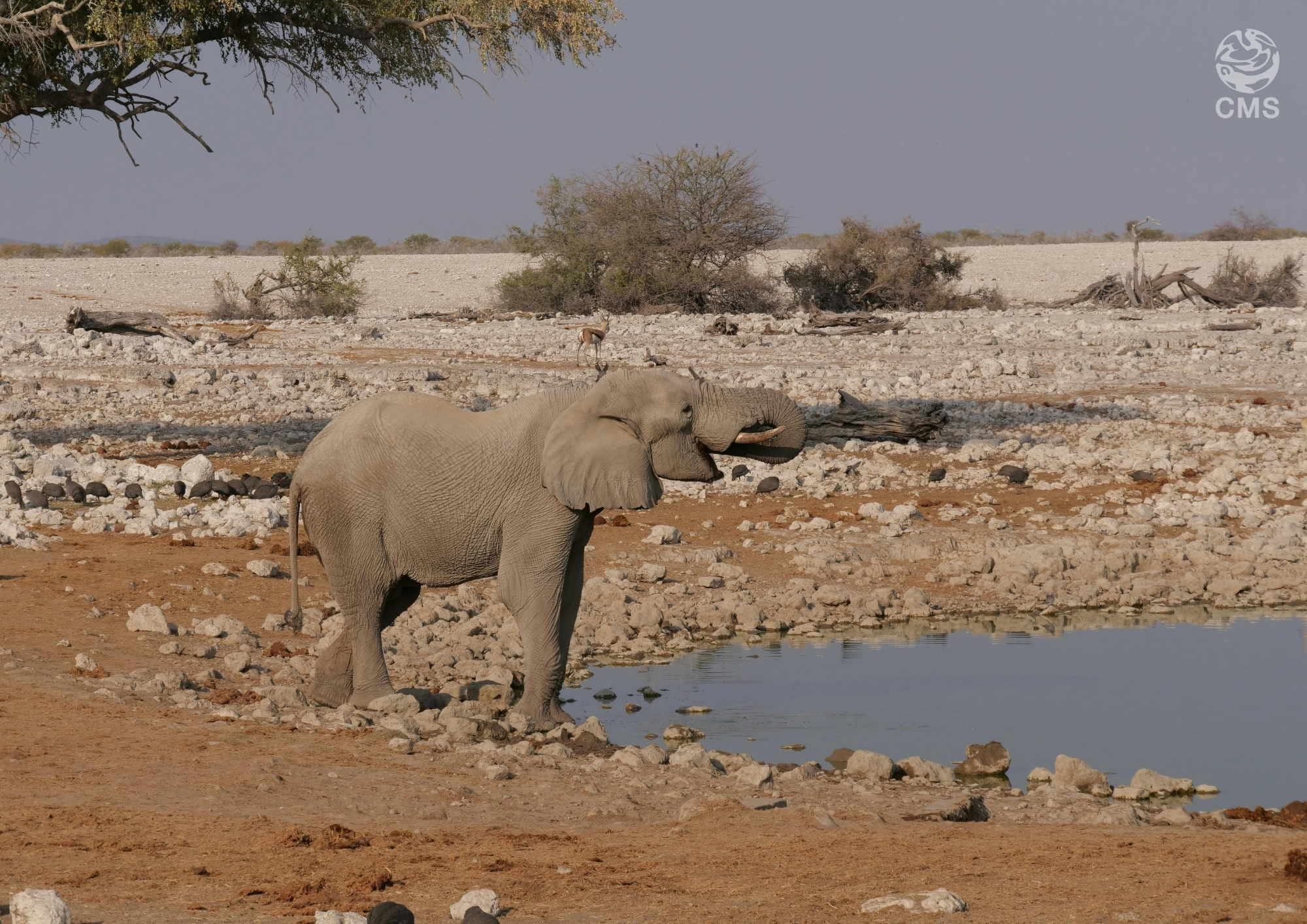
Migratory species depend on a web of habitats across continental borders. Climate change threatens these networks in multiple ways:
- Shifts in migration patterns: warming temperatures cause species to change both the timing and destination of their migrations, sometimes with negative viability consequences.
- Habitat loss and degradation: coastal and tundra, and freshwater systems are among the key habitats being lost or negatively transformed by climate change, affecting the species that live there.
- Mismatch of life cycle events: changes in the availability of food sources (such as insect hatching and plant growth) can become decoupled from species' arrival times, reducing replenishment opportunities.
- Increased mortality from extreme events: droughts, storms and wildfires among other exacerbated catastrophes cause direct mortality or reduce reproductive success.
CMS Mandate on Climate Change

CMS provides a leading global means of developing strategies at the international level and facilitating cooperation between countries to mitigate the impacts of climate change on specific species. One of the top priorities for CMS is maintaining and restoring ecological connectivity; improving the ecological network between natural habitats is necessary to lessen the disruption of climate change and enable the adaptation of wild animal species in a changing world.
History
The Fifth Meeting of the Conference of the Parties to CMS (COP5, 1997) passed a recommendation calling for the establishment of a small working group to guide the Scientific Council’s decisions on climate change. Recommendation 5.5 provided the foundation for CMS’s climate change mandate, and was further developed by:
- Resolution 8.13 (COP8, 2005) which was the first dedicated Resolution on climate change and migratory species;
- Resolution 9.7 (COP9, 2008) which recognised the need to strengthen collaboration with other MEAs;
- Resolution 10.19 (COP10, 2011) which called for improved research and monitoring;
- Resolution 12.21 (Rev.COP14) which is the most recent and comprehensive Resolution, updating earlier mandates and aligning CMS efforts with global climate and biodiversity frameworks.
A number of COP Decisions accompany these Resolutions, specifying actions to be taken by Parties, the Secretariat, and the Scientific Council. CMS work also focuses on energy transition with the CMS Energy Task Force that aims at minimising the negative impacts of renewable energy developments and their associated infrastructures on migratory species.
Other examples include the development of a CMS Programme of Work on Climate Change and ongoing input from the Climate Change Working Group.
The Climate Change Working Group
The Climate Change Working Group is an expert group established under the Scientific Council to provide technical and strategic advice on the implications of climate change for migratory species.
The Climate Change Working Group supports the Scientific Council by:
- Assessing climate vulnerability and emerging risks for migratory species;
- Identifying priorities for research, monitoring, and capacity building;
- Evaluating national and international responses to climate impacts;
- Drafting recommendations for CMS Parties based on scientific evidence;
- Supporting the integration of CMS priorities into broader climate and biodiversity frameworks.
The group is composed of Scientific Councillors, expert representatives, and invited observers from international organisations and institutions with relevant expertise. The group is chaired by the COP-appointed Scientific Councillor for Climate Change.
Climate Change Workshops
CMS has convened several workshops to strengthen understanding and collaboration on climate change and migratory species:
- 2025 Expert Workshop on Migratory Species and Climate Change (Edinburgh, UK) – Focused on identifying migratory species most at risk from climate change, how shifting migration routes and connectivity can be managed, how migratory species support climate change mitigation and adaptation, and the best nature-based solutions, ecosystem-based adaptations, and priorities for action.
- 2017 Workshop on Climate Change and Migratory Species: Regional Approach, Practical Measures and Examples (Bonn, Germany) – Focused on collating key examples of species listed on CMS Appendices impacted by climate change, identifying and promoting practical measures (inter alia examples of good practice), developing regional approaches, and operationalising selected activities included in the Programme of Work (PoW).
- 2014 Workshop Towards a CMS Programme of Work on Climate Change (Limon, Costa Rica) – With the objective of preparing a CMS Programme of Work on climate change and migratory species, the workshop focused on identifying key priorities for action and on the practicalities of delivering them over the coming triennium. The outcomes of the workshop were considered by the Scientific Council at its eighteenth meeting and the eleventh meeting of the Conference of the Parties to the CMS
- 2011 Technical Workshop on the Impact of Climate Change on Migratory Species (Camargue, France) – Focused on assessing species vulnerability, reviewing progress under the CMS climate change mandate, and drafting recommendations for action on climate change to be adopted by COP10.
Outcomes from workshops inform the work of the Climate Change Working Group and supported decision-making by CMS Parties.
International Cooperation
CMS addresses climate change in cooperation with other multilateral environmental agreements and processes, including, among others:
- United Nations Framework Convention on Climate Change (UNFCCC) – including alignment with the Paris Agreement;
- Convention on Biological Diversity (CBD) – particularly through the implementation of the Kunming-Montreal Global Biodiversity Framework;
- Ramsar Convention on Wetlands – on habitat-based adaptation and wetland conservation;
- Intergovernmental Science-Policy Platform on Biodiversity and Ecosystem Services (IPBES) – including its assessments on climate-biodiversity interlinkages;
This cooperation helps ensure CMS’s work complements and supports broader global efforts on climate resilience, adaptation, and mitigation.
Supporting the SDGs
CMS work on climate change directly contributes to achieving many of the Sustainable Development Goals (SDGs), especially:
- SDG 13 - Climate Action - through vulnerability assessments, adaptation planning, and policy integration;
- SDG 14 - Life Below Water - by addressing ocean warming and habitat change for marine migratory species;
- SDG 15 - Life on Land - through ecosystem-based approaches to species conservation;
- SDG 17 - Partnerships for the Goals - by working with MEAs and international scientific bodies.
Resources
- Resolutions
- Documents and Publications
- Climate Change Vulnerability of Migratory Species
- Migratory Species and Climate Change. Impacts of a Changing Environment on Wild Animals
- Climate change and migratory species: a review of impacts, conservation actions, indicators and ecosystem services
- Report of the Migratory Species and Climate Change Expert Workshop
- UNEP/CMS/COP15/Inf.28.12b Report on Climate Change Vulnerability Assessment Methodologies
- UNEP/CMS/COP15/Inf.28.12c Case Studies on the Ecosystem Services Migratory Species Support related to Climate Change Mitigation and Adaptation
- Fact Sheet on Monarch Butterflies and Climate Change
- Fact Sheet on Migratory Species and Climate Change
- Fact Sheet on African Wild Dogs and Climate Change
- Fact Sheet on Sundarbans and Climate Change
- Fact Sheet on Narwhals and Climate Change
- Fact Sheet on Loggerhead Turtles and Climate Change
- Fact Sheet on the Eurasian Steppe and Climate Change
- Fact Sheet on the Congo Basin and Climate Change
- Fact Sheet on Caspian Seals and Climate Change
- Fact Sheet on Blue Whales and Climate Change
- Scientific Papers
- Transboundary Wildlife Conservation in A Changing Climate: Adaptation of the Bonn Convention on Migratory Species and Its Daughter Instruments to Climate Change
- Effects of Rising Temperature on the Viability of an Important Sea Turtle Rookery
- Global analysis of the effect of local climate on the hatchling output of leatherback turtles. Scientific reports
- CMS News/ Press Releases (Recent)