
National Legislation Programme
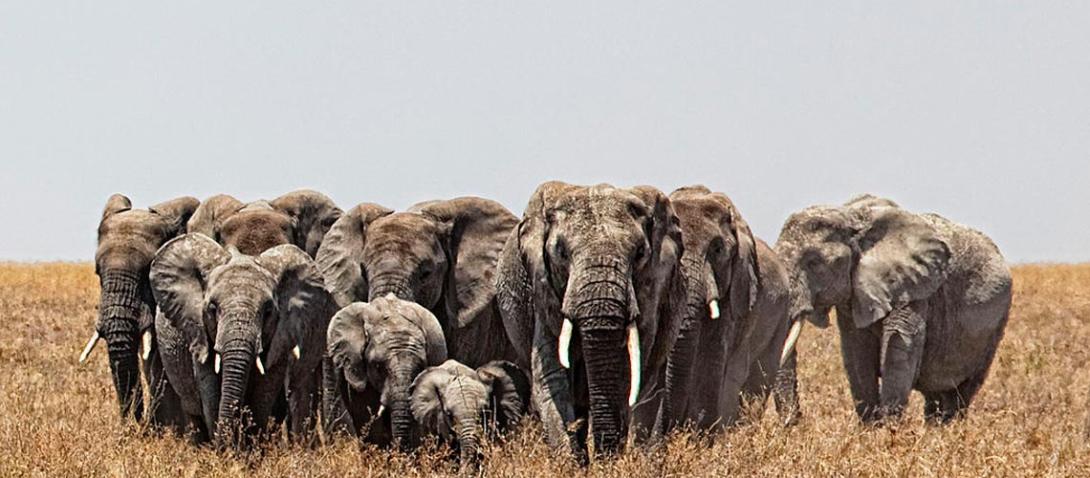
Photo of Elephants by Noel Feans, CC BY 2.0, via Wikimedia Commons

National Legislation Programme: an Overview
What is the National Legislation Programme?
The implementation of the Convention through national legislation and other domestic measures is key to achieve conservation and sustainable management of migratory species. The Conference of the Parties at its 12th meeting (Manila, 2017) adopted Resolution 12.9 and Decisions 12.6-12.9 to establish a National Legislation Programme to strengthen the implementation of the Convention through national legislation and support Parties, if needed, in developing or improving relevant national legislation.
The National Legislation Programme is a supportive, non-adversarial and facilitative activity, established to provide assistance to Parties in complying with CMS provisions, specifically to ensure long-term compliance with Article III.4 a) and b) and III.5 of the Convention.
Article III, paragraph 4 a) and b) and paragraph 5 of the Convention reads as follows:
ARTICLE III
4. Parties that are Range States of a migratory species listed in Appendix I shall endeavour:
a) to conserve and, where feasible and appropriate, restore those habitats of the species which are of importance in removing the species from danger of extinction;
b) to prevent, remove, compensate for or minimize, as appropriate, the adverse effects of activities or obstacles that seriously impede or prevent the migration of the species; ...
5. Parties that are Range States of a migratory species listed in Appendix I shall prohibit the taking of animals belonging to such species. Exceptions may be made to this prohibition only if:
a) the taking is for scientific purposes;
b) the taking is for the purpose of enhancing the propagation or survival of the affected species;
c) the taking is to accommodate the needs of traditional subsistence users of such species; or
d) extraordinary circumstances so require;
provided that such exceptions are precise as to content and limited in space and time. Such taking should not operate to the disadvantage of the species.
Documents on the National Legislation Programme
CMS Resolutions
CMS Decisions
- Decisions 14.28 to 14.29 (COP14) - Review Mechanism and National Legislation Programme
- Decisions 13.20 to 13.23 (COP13) - Review Mechanism and National Legislation Programme
- Decisions 12.6 to 12.9 (COP12) - Establishment of a Review Mechanism and a National Legislation Programme
CMS COP Pre-Meeting Documents
- COP14/Doc.24 - Review Mechanism and National Legislation Programme
- COP13/Doc.22 - Review Mechanism and National Legislation Programme
Global Workshop on CMS Legislation Documents, PPTs and Summary of Discussions
How does it work?
In line with Resolution 12.9, adopted at the 12th meeting of the Conference of the Parties (COP12, Manila, 2017), and Decision 14.28, adopted at the 14th meeting of the Conference of the Parties (COP14, Samarkand 2024), Parties are encouraged to submit to the Secretariat information regarding their legislation and other domestic measures relating to implementation of Article III, paragraph 4 a) and b) and paragraph 5 of the Convention.
To facilitate the process of obtaining information on the Parties’ legislation and other domestic measures relating to the implementation of these provisions, and in accordance with COP12 Resolution 12.9 and Decision 12.6, the Secretariat has provided:
- an Inventory of the Secretariat’s present information on Parties’ current legislation in relation to Article III.5; and
- a Questionnaire to enable Parties to identify whether they have in place adequate legislation relating to the implementation of Article III.4 a) and b) and III.5.
COP14 Decision 14.28 strongly encouraged Parties to submit to the Secretariat information regarding their legislation and other domestic measures relating to implementation of Article III.4 a) and b) and III.5.
70 Parties have so far submitted the completed questionnaire on Article III.5 to the Secretariat.

The depiction and use of boundaries, geographic names and related data shown on the map are not warranted to be error free nor do they necessarily imply official endorsement or acceptance by the United Nations.
The responses in the questionnaires, as well as information from the inventories, contributed to the preparation of Legislative Guidance Materials and a Model Law for the implementation of Article III.5. The Secretariat also provided National Legislation Profiles, including findings and recommended actions, to facilitate the identification of inconsistencies in the implementation of Article III.5.
According to Resolution 12.9, within six months of having received the findings and recommended actions from the Secretariat, Parties are requested to indicate the procedures, actions and reasonable time frames that are envisaged in response. Following the delivery of this information, Parties are requested to take appropriate measures for effective implementation of Article III.5, in accordance with their indicated procedures and time frames.
The Secretariat, in cooperation with relevant partners, will support Parties, as necessary and subject to the availability of resources, through the provision of, inter alia, guidance materials, model laws, technical assistance and capacity-building workshops in relation to Article III.4 a) and b) and III.5.
The European Union was recognized as Champion Plus for its generous support and commitment towards strengthening national legislation for migratory species for the period 2020-2025. This activity has been funded with the contribution granted by the European Commission under the Migratory Species Champion Programme and through the Global Public Goods and Challenges (GPGC Programme) Cooperation Agreements with UNEP.


The European Union was recognized as Champion Plus for its generous support and commitment towards strengthening national legislation for migratory species for the period 2020 - 2025. This activity has been funded with the contribution granted by the European Commission under the Migratory Species Champion Programme and through the Global Public Goods and Challenges (GPGC Programme) Cooperation Agreements with UNEP.
Timeline
| Directed to | Action | Time frame |
|---|---|---|
| The Secretariat | Encourage Parties that have not yet joined the National Legislation Programme to complete the NLP questionnaire and submit it to the Secretariat, and follow-up with Parties that have completed and submitted the National Legislation Programme questionnaire | |
| The Parties | Submit the questionnaires to the Secretariat, providing the requested information on implementation of Article III.4 a) and b) and III.5 | |
| The Parties | Inform the Secretariat about the procedures, actions and reasonable time frames envisaged | Within six months of having received the findings and recommended actions relating to implementation of Article III.5 from the Secretariat |
| The Parties | Take appropriate measures to implement Article III.5 | In accordance with the indicated time frames and procedures |
The Standing Committee will report to the Conference of the Parties on any action taken pursuant to Resolution 12.9.
Legislative Guidance
In line with COP12 Decision 12.6, COP13 Decision 13.20 and COP14 Decision 14.28, the Secretariat has prepared legal materials to assist Parties in drafting adequate national legislation to implement Article III.4 a) and b) and III.5 of CMS.

9 January 2025 | Guidance Material
24 June 2025 | Guidance Material
24 June 2025 | Guidance Material
Legislative Guidance for Maintaining, Improving, and Restoring Ecological Connectivity
Article III.5 of CMS explained
“Range State” in relation to a particular migratory species means any State that exercises jurisdiction over any part of the range of that migratory species, or a State, flag vessels of which are engaged outside national jurisdictional limits in taking that migratory species (CMS Article I.1 h)). "Range" means “all the areas of land or water that a migratory species inhabits, stays in temporarily, crosses or overflies at any time on its normal migration route” (CMS Article I.1 f)). CMS Article III.5’s “take prohibition” applies throughout the range of a species, including in:
- a State’s territory;
- all jurisdictional waters of the State (i.e. territorial seas and exclusive economic zone); and
- with respect to vessels that the State flags (and citizens on those vessels), areas beyond national jurisdiction where they operate (i.e. the high seas).
Appendix I of CMS lists migratory species that are endangered (CMS Article III.1). These are migratory species in danger of extinction throughout all or a significant portion of their ranges (CMS Article I.1 e)).
Any CMS Party may propose amendments to Appendix I at any ordinary or extraordinary meeting of the Conference of the Parties (CMS Article XI).
Consequently, national legislation should ensure that the taking of newly listed Appendix I animals is also prohibited.
A Party that flags vessels must ensure that it prohibits the “taking” of Appendix I marine species which range is outside the State’s jurisdictional waters if those vessels conduct activities in areas beyond the State’s jurisdiction.
Under CMS, “take” or “taking” means “taking, hunting, fishing, capturing, harassing, deliberate killing, or attempting to engage in any such conduct” (CMS Article I.1 i))
Neither CMS nor Resolutions of the Conference of the Parties have defined the meaning of “harassing”. Activities that could qualify as forms of harassment include disturbing, pursuing, injuring, feeding or otherwise intentionally disrupting an Appendix I species.
Article III.5 applies the take prohibition to “animals” but applying it to animals’ eggs and nests is consistent with the CMS definition of “take”. Destruction or removal of an egg constitutes capturing or deliberate killing of an animal; whereas destruction or removal of a nest could constitute a form of harassment.
“Exceptions may be made to this prohibition only if:
a) the taking is for scientific purposes;
b) the taking is for the purpose of enhancing the propagation or survival of the affected species;
c) the taking is to accommodate the needs of traditional subsistence users of such species; or
d) extraordinary circumstances so require;
provided that such exceptions are precise as to content and limited in space and time. Such taking should not operate to the disadvantage of the species.”
The first three exceptions have identifiable purposes and should be specified in the law(s) that implement CMS. They may also require further elaboration. The fourth exception — when “extraordinary circumstances so require” — is not a “catchall” exception. Parties should ensure that its scope is not too broad while also not foreclosing situations that may require the need for an exception (e.g. self-defense).
The exceptions should be clearly drafted, geographically limited, and timebound. Also, Parties should include thresholds in their laws to ensure that the “taking” of Appendix I animals does not undermine the species’ conservation status.
The competent authority should not issue a permit to allow the taking of an animal unless it makes affirmative findings with regard to all of the requirements of Article III.5.
The permit shall contain such terms and conditions as the competent authority deems necessary or appropriate to ensure that the “taking” is consistent with Article III.5.
Any permit issued pursuant to an exception should be revocable if the permittee fails to comply with its terms and conditions or if evidence indicates that the “taking” will disadvantage the species.
Parties may also wish to prohibit the transfer of any permit to “take” an Appendix I animal that has been granted.
Laws to implement Article III.5 should include both civil and criminal penalties for violations of the “take prohibition”. It is recommended to punish any “attempt” to take an Appendix I animal.
In addition to establishing financial penalties that are sufficient to deter future violations, CMS Parties may allow enforcement officers to seize and forfeit any animal(s) taken or property used to facilitate or commit the crime.
Parties may also include provisions for:
- the reparation of or compensation for the damage;
- the suspension or withdrawal of licenses, permits and authorizations issued to the offender, with consequent limitation, restriction or suspension of the activities that caused the violation, or partial or total shutdown of the premises and establishments where these activities are carried out; and
- additional penalties
Inventories
Disclaimer:
“The contents of the inventories are solely based on information submitted by Parties in their National Reports and official Accession documents and they do not necessarily reflect the views of UNEP/CMS. The designations employed in the documents do not imply the expression of any opinion whatsoever on the part of the CMS Secretariat or UNEP concerning the legal status of any country, territory, or area, or concerting the delimitation of its frontiers or boundaries.”
| Files |
|---|
|
National Legislation Inventory - Gabon
English
|
|
National Legislation Inventory - Somalia
English
|
|
National Legislation Inventory - Slovakia
English
|
|
National Legislation Inventory - Ireland
English
|
|
National Legislation Inventory - Denmark
English
|
|
National Legislation Inventory - Czech Republic
English
|
|
National Legislation Inventory - Cyprus
English
|
|
National Legislation Inventory - Cuba
English
|
|
National Legislation Inventory - Eritrea
English
|
|
National Legislation Inventory - Croatia
English
|
|
National Legislation Inventory - Côte d’Ivoire
English
|
|
National Legislation Inventory - Djibouti
English
|
|
National Legislation Inventory - Dominican Republic
English
|
|
National Legislation Inventory - Costa Rica
English
|