Global Dugong Report Reveals Urgent Conservation Gaps and Calls for Strengthened Regional Action
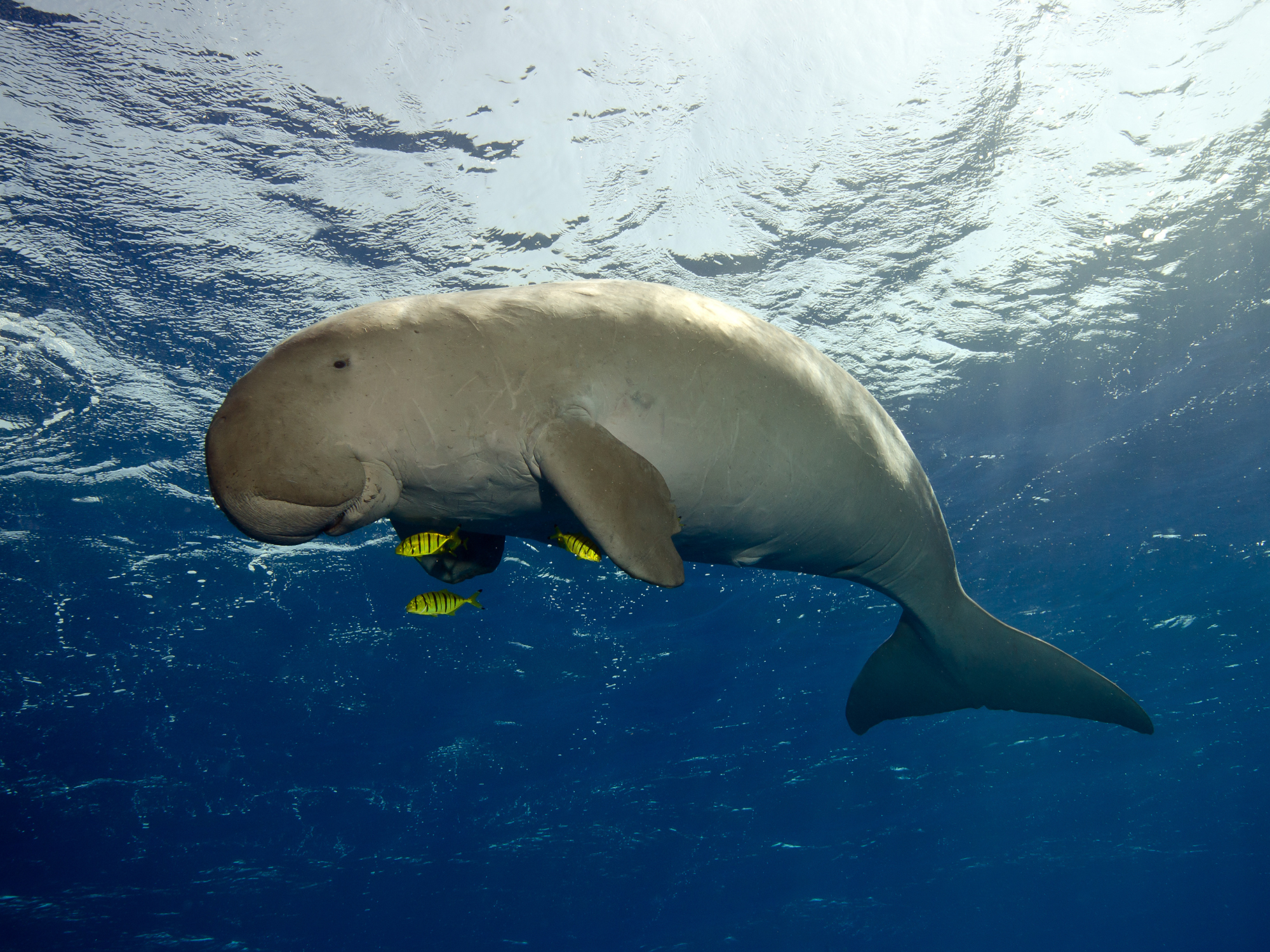
Abu Dhabi, 12 October 2025 – The Convention on the Conservation of Migratory Species of Wild Animals (CMS) has launched a landmark report at the IUCN World Conservation Congress in Abu Dhabi, offering the most comprehensive global update on the status and conservation needs of dugongs in over two decades. Dugongs are seagrass-grazing marine mammals, closely related to manatees.
Drawing on contributions from over 70 scientists and experts, the Global Assessment of Dugong Status and Conservation Needs presents a sobering picture of dugong populations worldwide, while identifying opportunities for targeted conservation action. The assessment was produced under the CMS Memorandum of Understanding on the Conservation and Management of Dugongs and their Habitats throughout their Range (CMS Dugong MOU), which works to ensure the long-term survival of dugongs and the seagrass habitats they rely on.
Key Findings
- The dugong’s global status is “vulnerable to extinction”, with significant regional variation. Populations are relatively secure in Australia and the Persian Gulf, but critically endangered or extinct in Eastern Africa, East Asia and several offshore island territories.
- Three regional populations—Eastern Africa, the Nansei Islands (Japan), and New Caledonia—are listed as critically endangered or endangered.
- Dugongs living in small, isolated island territories are at greatest risk.
- Only two locations in Asia are confirmed to host populations exceeding 100 individuals.
- Genetic diversity is high in Australian waters but low in the western Indian Ocean and isolated island territories, potentially affecting long-term resilience.
- Improved survey methods have led to a higher global population estimate than previously thought, particularly in Australia.
Top threats caused by human activities include habitat loss and degradation, climate change, noise, chemical and plastic pollution, interactions with fisheries and vessel strikes, traditional harvest and stranding of orphaned calves.
"Dugongs are unique marine mammals that are an integral part of many ocean ecosystems around the world. Conserving them and their habitats means protecting entire ecosystems that benefit both people and nature," said Amy Fraenkel, the CMS Executive Secretary.
Dugongs help maintain healthy seagrass meadows and can consume up to 30 kg of seagrass a day, which is their primary food source. As ecosystem engineers, dugongs recycle nutrients through grazing and keep meadows productive. These habitats serve as foraging and breeding grounds not just for dugongs but also for other marine species. Although seagrass meadows cover only ~0.2% of the ocean, they store about 10% of oceanic carbon by trapping CO₂ in seabed sediments via their roots, making them highly effective at mitigating climate change. In certain environments, these meadows can absorb carbon faster than tropical rainforests.
Threats and Conservation Priorities
The report calls for urgent conservation and restoration actions, including:
- Revising global dugong range data, including assessing eleven additional ‘subpopulations’ for IUCN listing.
- Integrating dugong habitat mapping into the 2030 Seagrass Breakthrough—a global plan to halt seagrass loss, double effective protection, and scale restoration by 2030, aiming to safeguard 16+ million hectares.
- Quantifying Blue Carbon values of dugong seagrass to strengthen conservation/restoration rationale.
- Implementing coastal megafauna protections and Regional Action Plans to coordinate efforts in areas where dugong numbers are now very low.
A Call to Action for Policymakers and Partners
The findings of the report underscore the need for coordinated science-based policy responses and long-term investment in dugong conservation. The report urges governments, regional bodies and international organisations to:
- Prioritise dugong conservation in national biodiversity strategies and action plans, particularly in regions where populations are most at risk.
- Invest in seagrass habitat mapping and restoration, particularly in the Red Sea, Asia and the Pacific island territories, recognising the dual role of these habitats in supporting dugong populations and enhancing climate resilience.
- Support the development and implementation of regional conservation frameworks, including transboundary initiatives under the CMS Dugong MoU.
- Strengthen community-based conservation efforts, ensuring that local knowledge and livelihoods are integrated into dugong protection strategies.
- Promote sustainable fisheries management, including measures to reduce bycatch and mitigate the impact of gill nets.
- Enhance data collection and monitoring, especially in regions with limited information on dugong populations and habitat conditions.
Commissioned by CMS and prepared by James Cook University, the report was developed with generous support from the Government of the United Arab Emirates through the Environment Agency – Abu Dhabi.
UN Wildlife Conservation Meeting to Address Threats to Migratory Species
From 23 to 29 March 2026, governments, scientists, conservationists, Indigenous Peoples and local communities, environmental leaders, and civil society from around the world are expected to gather at the 15th meeting of the Conference of the Parties to CMS (CMS COP15) in Campo Grande, Brazil. This landmark UN wildlife conservation meeting will tackle the urgent conservation challenges faced by dugongs and thousands of other migratory species of wild animals.
View the report: Global Assessment of Dugong Status and Conservation Needs
- NOTES TO EDITORS
About the Convention on the Conservation of Migratory Species of Wild Animals (CMS)
An environmental treaty of the United Nations, the Convention on the Conservation of Migratory Species of Wild Animals (CMS) provides a global platform for the conservation and sustainable use of migratory animals and their habitats. This unique treaty brings governments and wildlife experts together to address the conservation needs of terrestrial, aquatic, and avian migratory species and their habitats around the world. Since the Convention's entry into force in 1979, its membership has grown to include 133 Parties from Africa, Central and South America, Asia, Europe and Oceania. Discover more at www.cms.int
About the CMS Memorandum of Understanding on the Conservation and Management of Dugongs (Dugong dugon) and their Habitats throughout their Range (CMS Dugong MoU)
The Memorandum of Understanding on the Conservation and Management of Dugongs and their Habitats throughout their Range (Dugong MoU) aims to promote internationally coordinated actions to ensure the long-term survival of dugongs and their seagrass habitats throughout their extensive range. The CMS Dugong MoU provides a vital platform for collaboration among more than 40 range States, enabling shared learning, coordinated action and the mobilisation of resources.
The Dugong MoU is administered by the CMS Office in Abu Dhabi alongside the Raptors MoU Coordinating Unit. The Dugong MoU Secretariat is funded and hosted by the Environment Agency - Abu Dhabi, on behalf of the Government of the United Arab Emirates.
More information is available at dugong.cms.int
- PRESS CONTACT
For more information or press interview requests, please contact Aydin Bahramlouian, Public Information Officer, CMS Secretariat at +49 228 815 2428, [email protected]