
Events
The 17th meeting of the Conference of the Parties (COP17) to the Convention on Biological Diversity (CBD) will take place in Yerevan, Armenia from 19 to 30 of October 2026. COP17 will mark the first global review of collective progress towards the implementation of the Kunming-Montreal Global Biodiversity Framework (KMGBF).
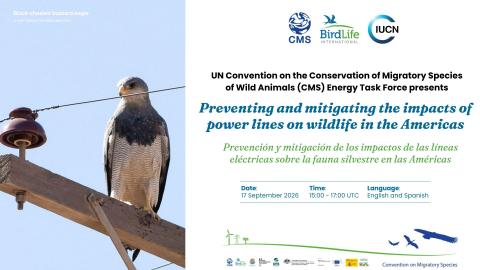
Traducción al español más abajo
Organised by the CMS Energy Task Force (ETF)
Date: 17 September 2026
Time: 15:00 – 17:00 UTC (16:00 – 18:00 BST/17:00 – 19:00 CEST)
Speakers: CMS Secretariat, IUCN, BirdLife International and other ETF Members
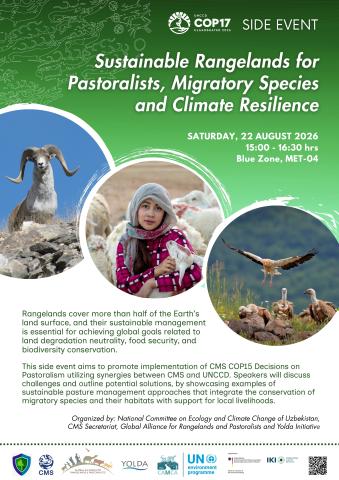
Abstract:
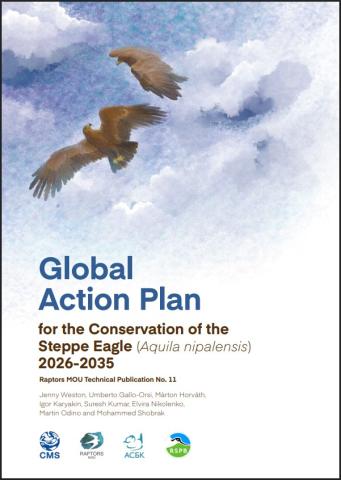
The Coordinating Unit of the Raptors MOU is pleased to share the webinar recording of:
“One Species, 62 Range States: Launching the Global Action Plan for the Conservation of the iconic Steppe Eagle”
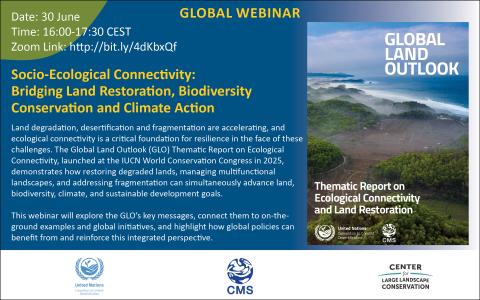
| When? | 30 June 2026, 16:00-17:30CEST (90 minutes) |
| Organised by: | The Centre for Large Landscape Conservation (CLLC), The United Nations Convention to Combat Desertification (UNCCD), and the Convention on the Conservation of Migratory Species of Wild Animals (CMS) |
| Target Au |
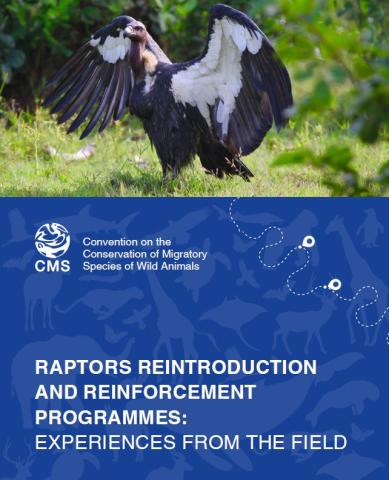
The Coordinating Unit of the Raptors MOU is pleased to announce the release of our new report, “Raptors Reintroduction and Reinforcement Programmes: Experiences from the Field.” This report draws on extensive case studies and interviews to highlight the key factors contributing to successful raptor conservation efforts.
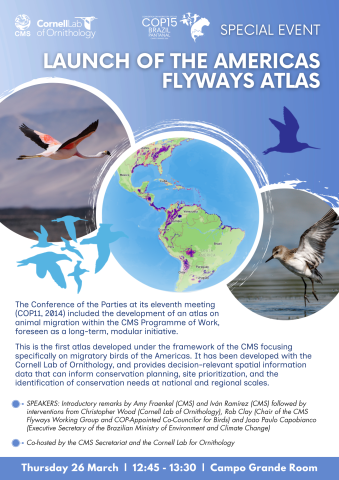
The Conference of the Parties at its eleventh meeting (COP11, 2014) included the development of an atlas on animal migration as an activity to pursue within the CMS Programme of Work. The production of an atlas was foreseen as a long-term initiative, expected to be continued in the future, and to be implemented through a modular approach.

Over recent decades, light pollution has emerged as a growing concern, affecting areas from astronomy to human health, with the most significant impacts on the environment and biodiversity. Numerous studies confirm the severe effects of artificial light at night (ALAN) on various species, prompting regulatory developments at local, national, and international levels.