
>> Livestream available here <<
National legislation and legal institutions are critical to the implementation of multilateral environmental agreements. The Convention on the Conservation of Migratory Species of Wild Animals (CMS) is a legally binding agreement of the United Nations. It recognizes that “States are and must be the protectors of the migratory species of wild animals that live within or pass through their national jurisdictional boundaries.”
Pursuant to Article III of the Convention, endangered species are listed in Appendix I, and there is a strict prohibition on their taking by Parties that are Range States of such species. Article III further calls on these Parties to take additional measures to conserve and restore these species, including the conservation and restoration of their habitats and the removal or mitigation of obstacles that seriously impede or prevent their migration.
Accordingly, the implementation of the Convention’s normative principles, legal commitments, objectives, and instruments requires not only legislation but also sustained dialogue with a broad range of actors and effective integration into existing national and subnational environmental law frameworks, particularly those governing wildlife, habitats, and flora.
Within this context, judges play a central role—not only in criminal enforcement, but also in administrative adjudication and civil liability. Judicial engagement is essential to ensuring that international and domestic environmental obligations are effectively implemented at the national level.
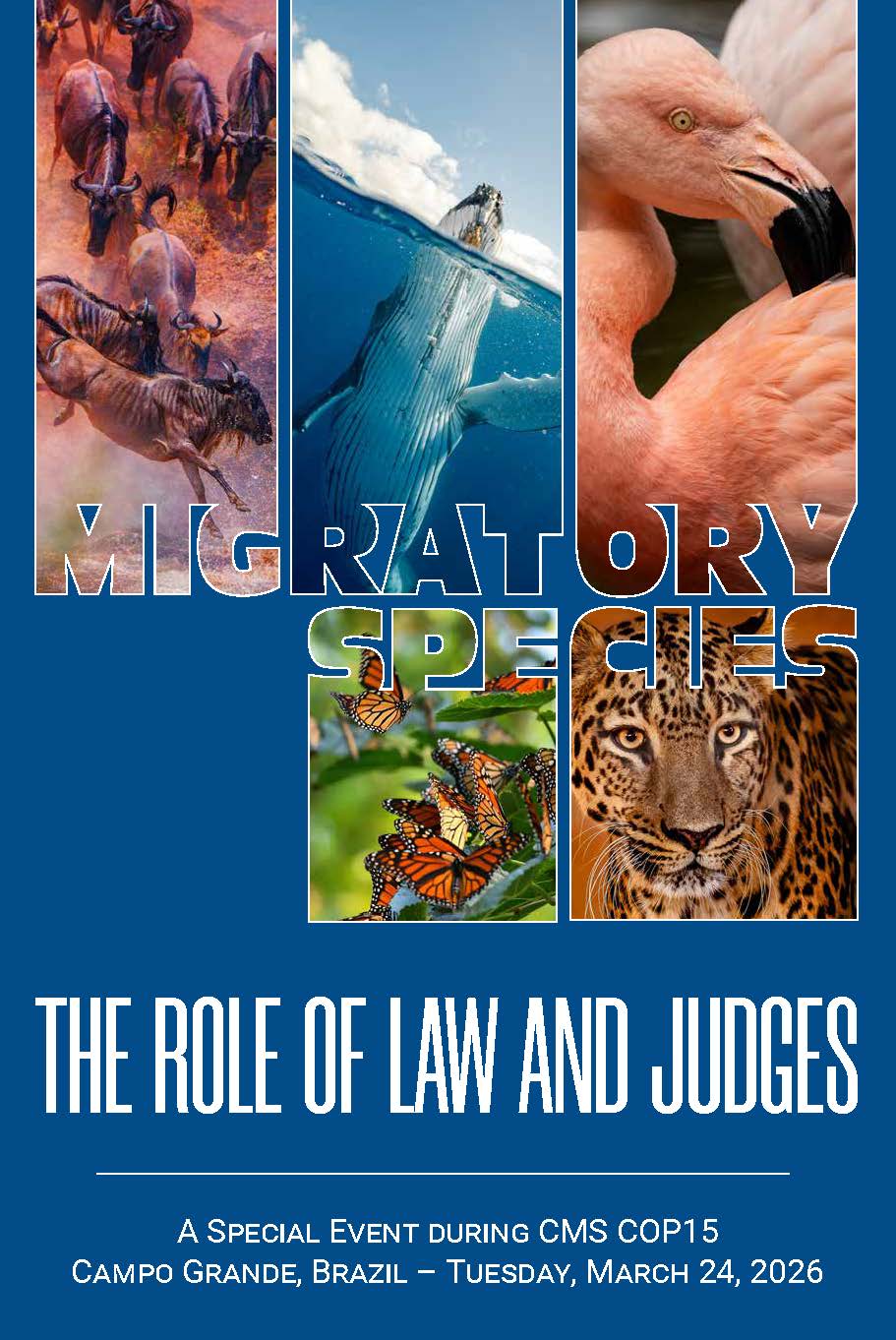
This workshop focuses on the legal dimensions of the relationship between migratory species, habitats, flora, and the law. It also highlights the importance of judicial implementation and the role of courts in advancing the implementation of CMS as part of broader environmental governance.