

Asia-Pacific Illegal Taking of Migratory Birds Intergovermental Task Force (ITTEA)
The illegal hunting, taking, and trade of migratory birds is a significant threat to migratory birds across the East Asian-Australasian Flyway (EAAF).

Action Plan Addressing Unsustainable Use and Trade of Hawksbill Turtles in South-East Asia and the Western Pacific Ocean Agreed

Impacts of Plastic Pollution on Freshwater Aquatic, Terrestrial and Avian Migratory Species in the Asia and Pacific Region
This study identifies the impacts of plastic pollution on land and freshwater migratory species protected by the Convention on the Conservation of Migratory Species of Wild Animals (CMS).
La plongée la plus profonde de l’histoire révèle... un sac plastique au fond du Pacifique
L’explorateur américain Victor Vescovo est descendu avec son sous-marin à 10.927 mètres de profondeur, le 1er mai, dans la fosse des Mariannes, dans l’océan Pacifique.

Workshop on Dugong and Seagrass Conservation in the Pacific

Meetings in Singapore Set up the Avian Agenda for the East Asian-Australasian Flyway
Executive Summary:
2011 was declared the Pacific Year of the Dugong. With a regional theme “Respect and Protect”, the campaign aimed at increasing protection of dugongs and their habitats by raising awareness, improving knowledge and fostering partnerships for conservation of dugongs and their habitats. Led by the South Pacific Regional Environment Programme (SPREP) and the Convention on the Conservation of Migratory Species of Wild Animals (UN Environment Programme/CMS), the campaign aimed to initiate sustainable and long-term dugong protection by fostering community participation in environmental stewardship by improving their economic livelihoods.
Background:
Dugongs have high cultural value, are a valued source of food, medicine and artifacts, and thus are an important species for coastal people. Dugongs also play a significant ecological role in maintaining coastal habitats.
A new pilot project using financial incentives to address direct hunting and the incidental capture of dugongs by changing people’s practices and improving the livelihoods of local communities was one of the initiatives to be promoted under the Pacific Year of the Dugong in 2011.
The initiative to protect the dugong, led by SPREP targeted local coastal and fishing communities and water craft users in the Pacific region by showing that livelihoods and conservation are linked.
More information can be found in the media release to the right.
2011 was declared the Pacific Year of the Dugong. With a regional theme “Respect and Protect”, the campaign aimed at increasing protection of dugongs and their habitats by raising awareness, improving knowledge and fostering partnerships for conservation of dugongs and their habitats. Led by the South Pacific Regional Environment Programme (SPREP) and the Convention on the Conservation of Migratory Species of Wild Animals (UN Environment Programme/CMS), the campaign aimed to initiate sustainable and long-term dugong protection by fostering community participation in environmental stewardship by improving their economic livelihoods.
- Promote awareness and conservation of dugongs at site level targeting key stewards and the fishing industry;
- Reduce dugong mortality from human activities;
- Improve status information and promote sustainable management of dugong populations and protection of their habitats at their national level through effective practical national legislation and policies; and
- Advance partnerships and to secure resources for long-term support for dugong conservation in the region.
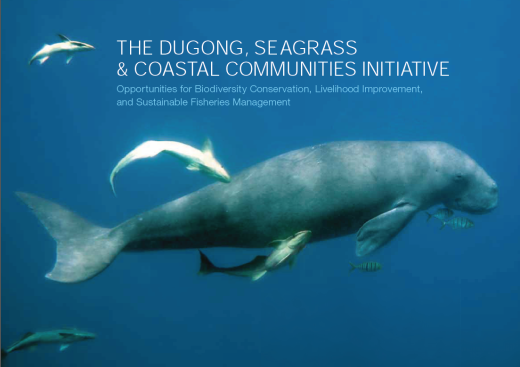
Dugong, Seagrass and Coastal Communities Initiative
The Dugong, Seagrass and Coastal Communities Initiative encompasses complementary activities to support the conservation of dugongs and their seagrass habitats throughout the over 40 Range Sta
2000_Green Turtle genetics_University of Queensland
Sampling tissue from major rookeries
Genetic data analysis