
Global Land Outlook - Thematic Report on Ecological Connectivity and Land Restoration
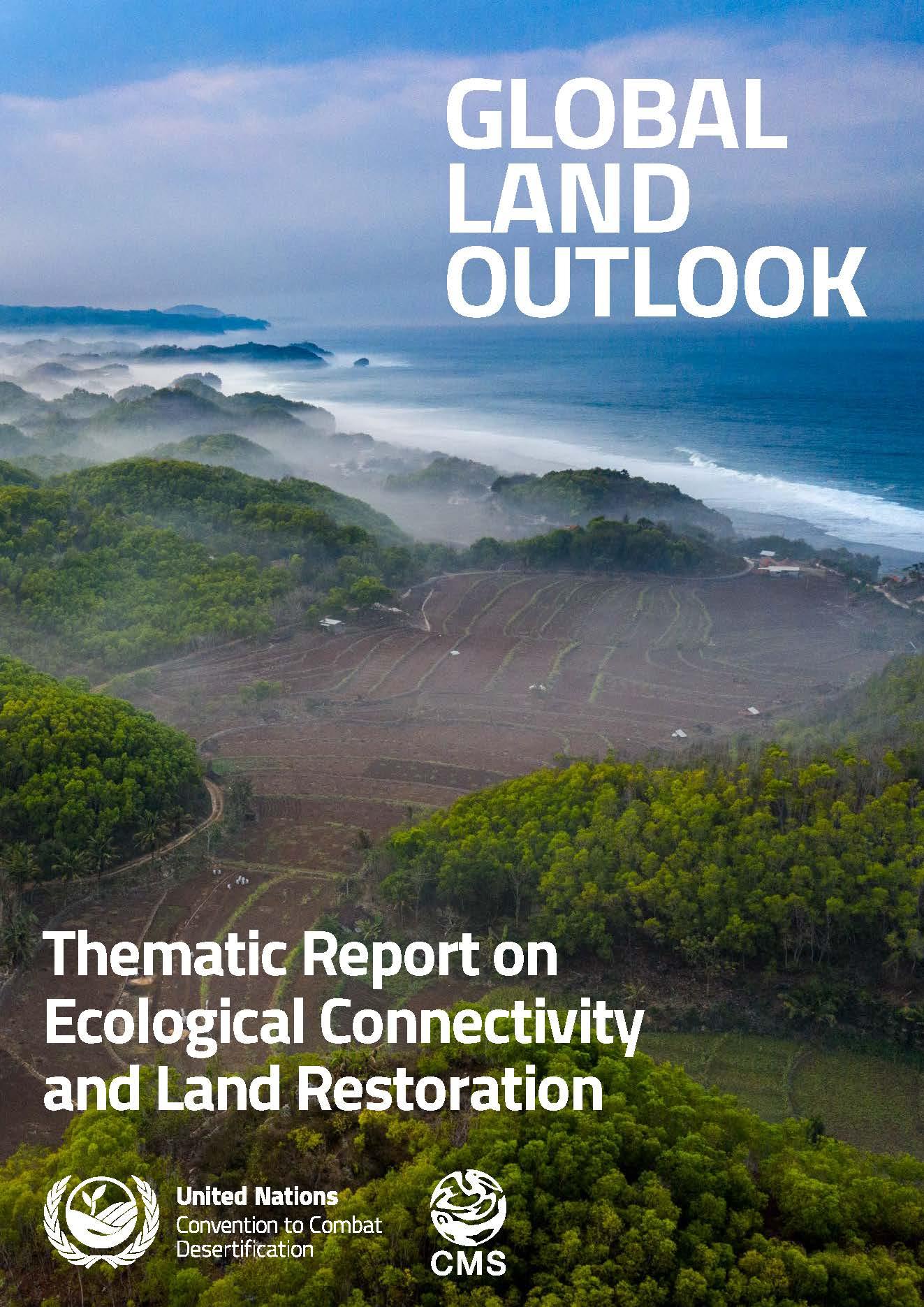
Connectivity is a critical yet frequently overlooked attribute of well-functioning ecological processes, which are essential for the survival of species, human well-being and the health of landscapes. All natural processes that support life on Earth take place within complex social-ecological systems in which humans and nature interact and influence each other. This multi-dimensional connectivity provides a framework for understanding the complex and dynamic interactions between society and the environment.
Ecological connectivity is far more than the movements of animals between different habitats. It is a broad concept that considers the biotic and abiotic structures and functions that support healthy populations and the delivery of ecosystem services that underpin our societies and economies. For instance, clean air and water, pollination and pest control, soil erosion and flood control and climate regulation are all dependent on ecological connectivity.
Connectivity allows for the flow of resources, information and species, enhancing the resilience of both social
and ecological systems in the face of climate change, land degradation and biodiversity loss. This includes
ecological processes that connect communities, ecosystems and landscapes, such as:
• water-mediated transfers of matter, energy and organisms within the hydrological cycle,
• regulation of energy fluxes, such as solar, wind and water;
• unimpeded movement of species on land, in water and in the air, including the exchange of genetic material and the dispersal of individuals among populations;
• spatial and temporal linkages associated with migratory patterns and climate change-induced range shifts;
• communication, collaboration and knowledge exchange, which for humans can lead to restorative measures that enhance connectivity.