
Connecting Landscapes and Livelihoods: Advancing Cooperation for Pastoralism and Migratory Species Conservation
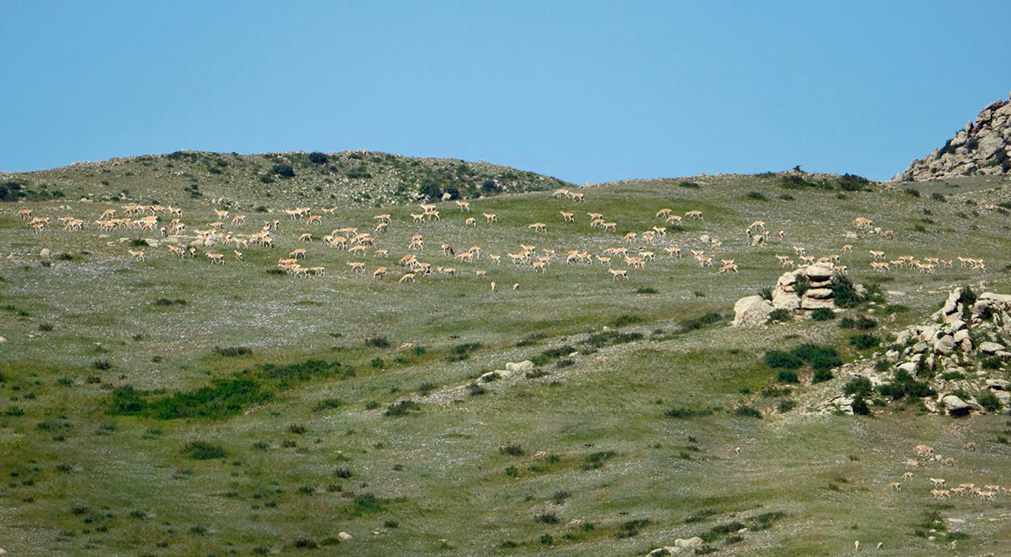
Bonn, 5 November 2026 – Migratory wild animals play a vital role in maintaining healthy ecosystems as they move across landscapes. Herbivores such as saiga antelopes in Central Asia, white-eared kob in Africa and guanacos in South America can contribute to grazing dynamics, nutrient cycling and seed dispersal. Migratory scavengers such as vultures provide valuable ecosystem services by rapidly removing livestock and wild animal carcasses, reducing the persistence of carrion that can pose disease risks. These ecological functions contribute to the health and resilience of rangelands on which millions of people also depend.
Migratory species also depend on healthy, connected ecosystems throughout their life cycles. Across many regions, the same landscapes that support wildlife movements sustain pastoralist communities whose livelihoods are closely tied to the land. The relationship between pastoralism and wildlife is complex, presenting opportunities for conservation alongside challenges that require careful management.
The scale of these challenges was highlighted in the first global assessment, presented in the State of the World's Migratory Species report (2024), which found that three-quarters of migratory species listed under the Convention on the Conservation of Migratory Species of Wild Animals (CMS) are affected by habitat loss and degradation. For terrestrial migratory species, these pressures are often associated with unsustainable land-use practices, including livestock grazing that exceeds the carrying capacity of ecosystems. Competition for pasture and water can further contribute to the decline of migratory species and increase human-wildlife conflict.
When managed sustainably, rangelands can support biodiversity, maintain habitat connectivity and reduce pressure to convert natural landscapes to other forms of land use that are less suitable for wildlife. They can also accommodate the movements of both wildlife and pastoralists, benefiting ecosystem functions and pastoral livelihoods. Many migratory birds and mammals listed under CMS therefore both depend on and contribute to the health of these shared landscapes.
CMS Parties have long recognized these connections and sought to address them through species-specific action plans and regional initiatives. Translating these commitments into action on the ground, however, remains a challenge.
Building on a Shared Foundation
Growing cooperation between CMS and the United Nations Convention to Combat Desertification (UNCCD) has brought greater attention to the connections between pastoralism, migratory species conservation and sustainable rangeland management. The designation of 2026 as the United Nations International Year of Rangelands and Pastoralists has brought further attention to the importance of these shared priorities.
An important step came in 2025, when the two conventions collaborated on the Global Land Outlook Thematic Report on Ecological Connectivity and Land Restoration. The report examined how land degradation, habitat fragmentation and declining connectivity affect ecosystems, wildlife and people. It emphasized that maintaining ecological connectivity is important not only for migratory species but also for ecosystem resilience, sustainable development and climate adaptation.
The Convention on Biological Diversity's (CBD) 2026 State of Biodiversity Action report also recognizes the CMS-led Global Partnership on Ecological Connectivity, which brings together CMS, CBD, UNCCD and other partners to maintain and restore connectivity across landscapes, rivers and seascapes. The report identifies UNCCD's contributions to land degradation neutrality, ecosystem restoration and ecological connectivity under the Kunming-Montreal Global Biodiversity Framework.
It also includes a case study from Mongolia, where a livestock taxation policy introduced in 2020 seeks to address pressures on rangelands through livestock management. The case illustrates the close connections between grazing practices, rangeland conditions and pastoralist livelihoods, as well as the potential role of national policies in supporting more sustainable land management.
Cooperation between CMS and UNCCD was further strengthened at the fifteenth meeting of the CMS Conference of the Parties (COP15) in Campo Grande, Brazil, where Parties adopted Decisions addressing interactions between pastoralism and migratory species. In particular, Decision 15.205 mandated the CMS Scientific Council Working Group on Pastoralism to cooperate with the UNCCD Secretariat in developing recommendations on sustainable pastoralism in migratory species habitats and identifying ways to integrate them into land-use planning and conservation policies.
At UNCCD COP17 in August 2026, the CMS Secretariat participated in three side events addressing different aspects of this shared agenda, from the mobility of pastoralists and wildlife to ecological connectivity and large-scale rangeland restoration.
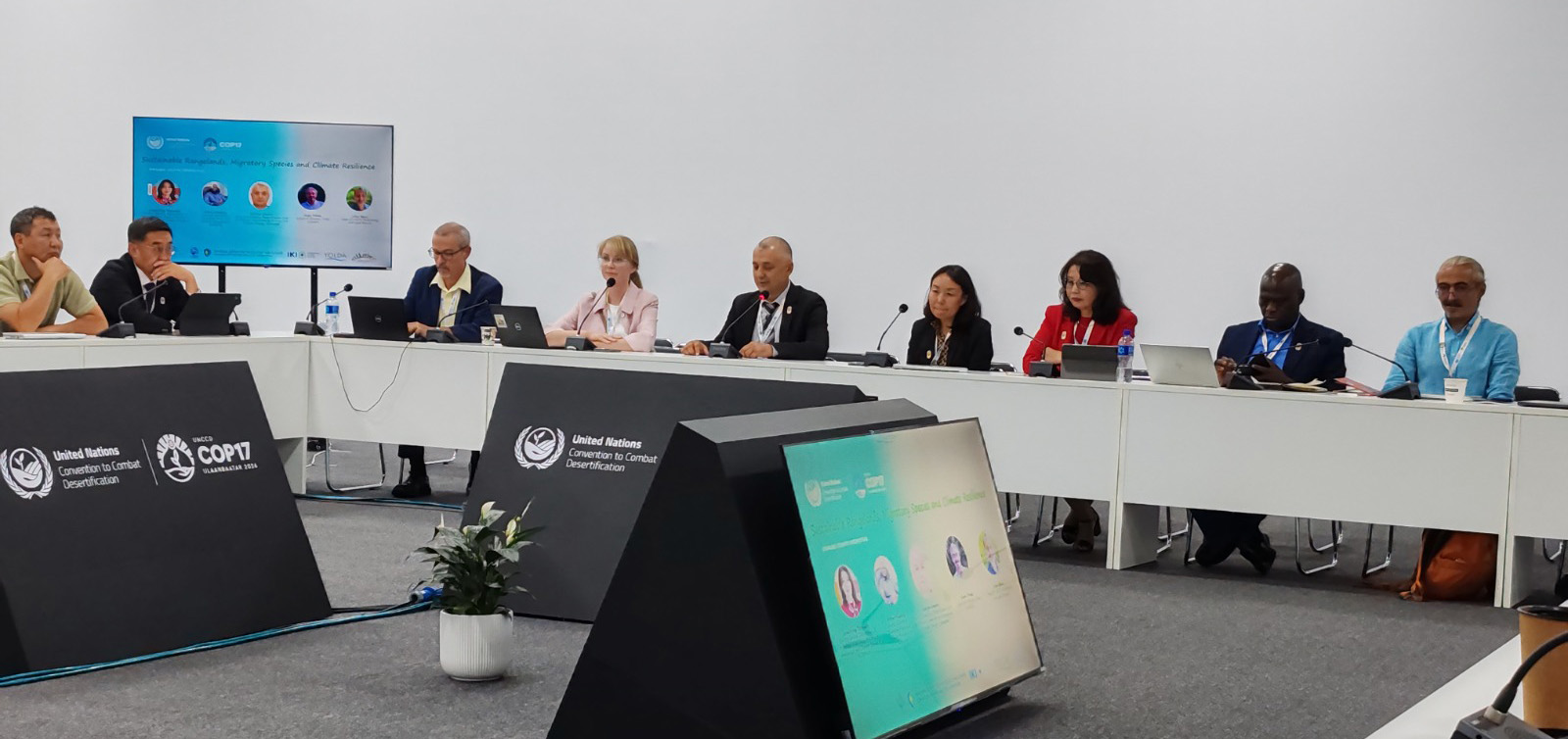 |
| Speaker panel at the side event: Sustainable Rangelands for Pastoralists, Migratory Species and Climate Resilience co-organized by the CMS Secretariat with the Government of Uzbekistan and the Yolda Initiative and funded through the CAMCA Project under the International Climate Initiative of the German Government. 22 August 2026 |
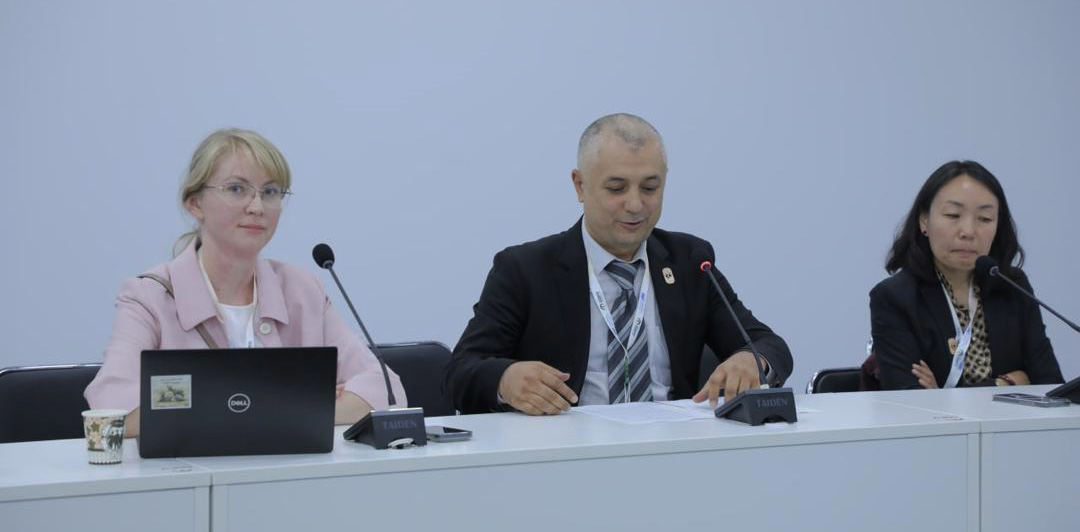 |
| Mr. Sobirjon Umarov delivering the intervention of Uzbekistan and CMS delegation members Polina Orlinskiy and Nandintsetseg Dejid |
Connecting Wildlife Conservation and Rangeland Management
The CMS Secretariat, in collaboration with the Government of Uzbekistan and the Yolda Initiative, organized a side event on strengthening links between the CMS and UNCCD mandates and advancing their joint implementation.
Supported by the Central Asian Mammals and Climate Adaptation (CAMCA) Project, funded through the International Climate Initiative of the German Government, the event brought together experts and practitioners working on rangeland management, wildlife conservation and community livelihoods.
The discussion began with an issue central to both mandates: the importance of mobility for wildlife and pastoralist communities. Drawing on experiences from Mongolia, CMS COP-appointed Councillor for Terrestrial Mammals Nandintsetseg Dejid emphasized that sustainable grazing practices and ecological connectivity are essential for maintaining productive and healthy dryland ecosystems. Engin Yilmaz, Executive Director of the Yolda Initiative, presented research on the interdependencies between mobile pastoralist systems and migratory vulture populations.
Country examples provided a closer look at how these issues are being addressed. In Mongolia, Uranchimeg Tserendorj, Head of the Protected Area Department at the Ministry of Environment and Climate Change, described partnerships with pastoralist communities to conserve habitats used by the highly mobile Mongolian gazelle. Sobirjon Umarov, representing the Government of Uzbekistan, outlined national efforts to protect goitered gazelles and Bukhara deer while addressing broader landscape management priorities. From Zimbabwe, Arthur Msakwa, Director of Operations of the Zimbabwe Parks and Wildlife Management Authority, shared lessons from Transfrontier Conservation Areas, including approaches to managing coexistence challenges involving elephants and cheetahs.
The discussion also addressed how wildlife conservation can be better integrated into land management policies. Jonathan Davies, a senior consultant supporting UNCCD's Rangelands Initiative, identified areas where the mandates of CMS and UNCCD complement one another, particularly through sustainable rangeland management and restoration. Julian Blanc, Head of UNEP's Biodiversity and Land Branch, presented the Ak Ilbirs Ecological Corridor in Kyrgyzstan as an example of integrating migratory species conservation into land-use planning across multiple sectors.
Participants identified several obstacles to implementation, including human-wildlife conflict, disease transmission between livestock and wildlife, and the difficulty of maintaining ecological connectivity in increasingly fragmented landscapes. Addressing these issues will require coordination across sectors and borders, with conservation measures that take account of pastoralist livelihoods and the movement of wildlife.
From Barriers to Connectivity
The importance of maintaining and restoring ecological connectivity was explored at the side event From Barriers to Connectivity: Solutions, organized by WCS Mongolia, WWF Mongolia and Mongolia's Ministry of Environment and Climate Change.
The event focused on reconnecting fragmented landscapes in Mongolia by identifying, restoring and protecting migration routes used by species such as the CMS-listed Asiatic wild ass and Mongolian gazelle. These examples showed how targeted measures can help preserve connectivity essential for wildlife movement.
In her keynote address, Polina Orlinskiy highlighted CMS commitments to avoid, remove or compensate for barriers to migration and reduce threats to migratory species. She also emphasized that connected rangelands offer opportunities for complementary action under CMS, UNCCD and CBD.
Restoring Functioning Rangeland Ecosystems
Restoring fully functioning rangelands requires more than maintaining migration routes. This was the focus of another side event, Restoring Fully Functional Rangeland Ecosystems at Scale, which aimed to build a community of practice around large-scale rangeland restoration.
Representatives of the Altyn Dala Conservation Initiative, American Prairie, WCS Mongolia and Rewilding Argentina shared approaches to restoring landscapes and wildlife populations, including saiga antelope, Asiatic wild ass and jaguar. Although the initiatives differed in geography and strategy, they addressed a common challenge: recovering wildlife populations while restoring their ecological functions in the landscapes they inhabit.
The social dimensions of restoration were also discussed. Several speakers emphasized that long-term success depends on coexistence between people and wildlife, particularly the acceptance of wildlife by communities living in or near wildlife habitat.
The CMS Secretariat outlined the Convention's obligations to restore habitats and achieve favourable conservation status for migratory species, ensuring their long-term viability within functioning ecosystems.
Advancing Cooperation Beyond UNCCD’s COP17
The three events addressed closely related aspects of rangeland conservation and management: sustaining the mobility of wildlife and pastoralists, protecting ecological connectivity, and restoring wildlife populations and ecosystem functions. They also identified areas where closer cooperation between CMS and UNCCD could support national efforts to reconcile biodiversity conservation with land management and pastoral livelihoods.
Further cooperation is planned through a joint meeting of the CMS African-Eurasian Landbirds Action Plan Working Group and UNCCD in Zimbabwe in December 2026. The meeting will explore how migratory species conservation can be integrated into Land Degradation Neutrality Targets.
Together with the implementation of the CMS COP15 Decisions on Pastoralism, this work provides an opportunity to bring migratory species conservation more directly into rangeland management and restoration policies, while addressing the needs of communities that depend on these landscapes.
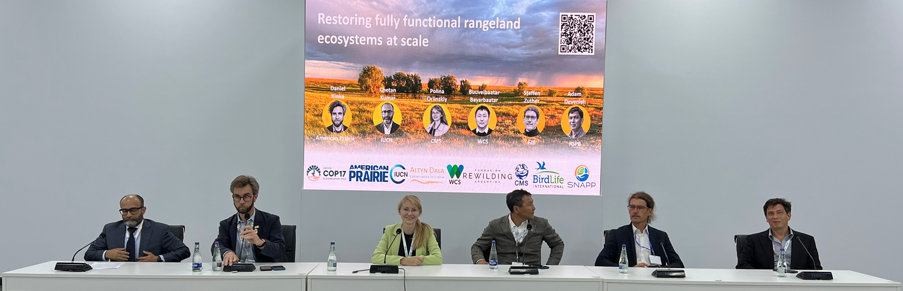 |
| Speaker panel at the side event ‘Restoring Fully Functional Rangeland Ecosystems at Scale’ |
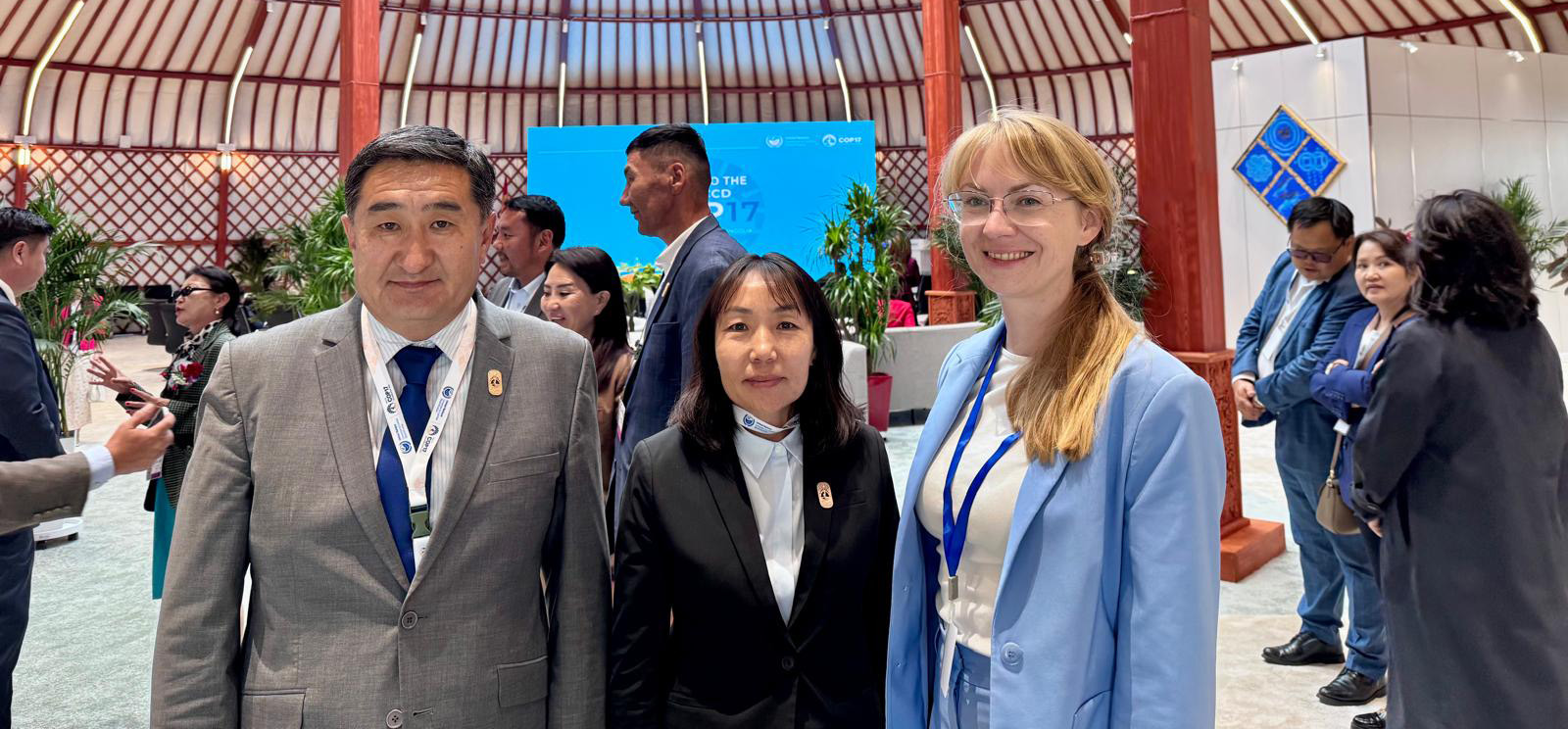 |
| Mr. Baljinnyam Tudevdorj, CMS National Focal Point for Mongolia, Ms. Nandintsetseg Dejid, CMS COP-appointed Councillor for Terrestrial Mammals, Ms. Polina Orlinskiy, CMS Secretariat at the Mongolian House at UNCCD COP17. |