
Working Groups
Working Groups are normally established either in a formal or informal manner in the context of the bodies (decision-making and subsidiary) of CMS and its instruments. Some of these Working Groups operate only during the meeting of these bodies while others have the mandate to work intersessionally to provide advice or recommendations. Depending on the nature of their mandate, Working Groups can be composed of Member States’ representatives or scientific experts within or without the technical bodies of these instruments.
A number of further Working Groups on various issues and species have been established under the Agreements and MOUs.
Active Working Groups
Création du Groupe de travail
La dixième réunion de la Conférence des Parties à la CMS (COP10, 2011) a adopté la résolution 10.27 Améliorer l'état de conservation des oiseaux migrateurs terrestres en Afrique et en Eurasie. À travers cette résolution, la Conférence des Parties appelle le Conseil scientifique et le Secrétariat à soutenir cette initiative, notamment par l’établissement d’un groupe de travail placé sous l’égide du Conseil scientifique et destiné à guider l'élaboration et la mise en œuvre du Plan d’action.
CMS Appendix I and II list many migratory aquatic mammal species. CMS COPs have also adopted several Resolutions that cover aquatic mammals, their habitats and the threats to which they are exposed. The Aquatic Mammals Working Group was established in 2011 through Resolution 10.15 Global Programme of Work for Cetaceans. When Resolution 10.15 was repealed and consolidated into Resolution 14.9 at COP14, it reiterated the request to the Scientific Council to continue supporting this working group.
The Animal Culture Expert Working Group (ACEWG) was established through Resolution 11.23 to assist the Parties of the Convention on Migratory Species and its associated instruments with understanding the conservation implications of culture and social complexity. Following an initial focus on cetaceans, since 2017 it has considered the conservation implications of social learning and animal culture for all taxonomic groups covered by the Convention.
The Joint Noise Working Group (JNWG) will support the Parties, scientific and advisory bodies and Secretariats of CMS, ACCOBAMS and ASCOBANS in the implementation of the mandates of relevant Resolutions of all three organizations, such as CMS Resolution 12.14 and Decisions 13.58-13.60, ACCOBAMS Res 2.16, ACCOBAMS Res.3.10, ACCOBAMS Res.5.15, ACCOBAMS Res.6.17, ACCOBAMS Res 7.13, ASCOBANS Res.6.2, ASCOBANS Res.9.1, ASCOBANS Res.8.11(Rev.MOP9), and any relevant Resolutions still to be passed.
In addition to its review of priority pollution threats, the CMS Marine Pollution Workshop (2025) recommended, inter alia, the establishment of an open-ended working group to support the work of CMS on this broad topic. Such a group, operating under the Scientific Council, will allow expert opinion to inform the development and delivery of an appropriate work programme.
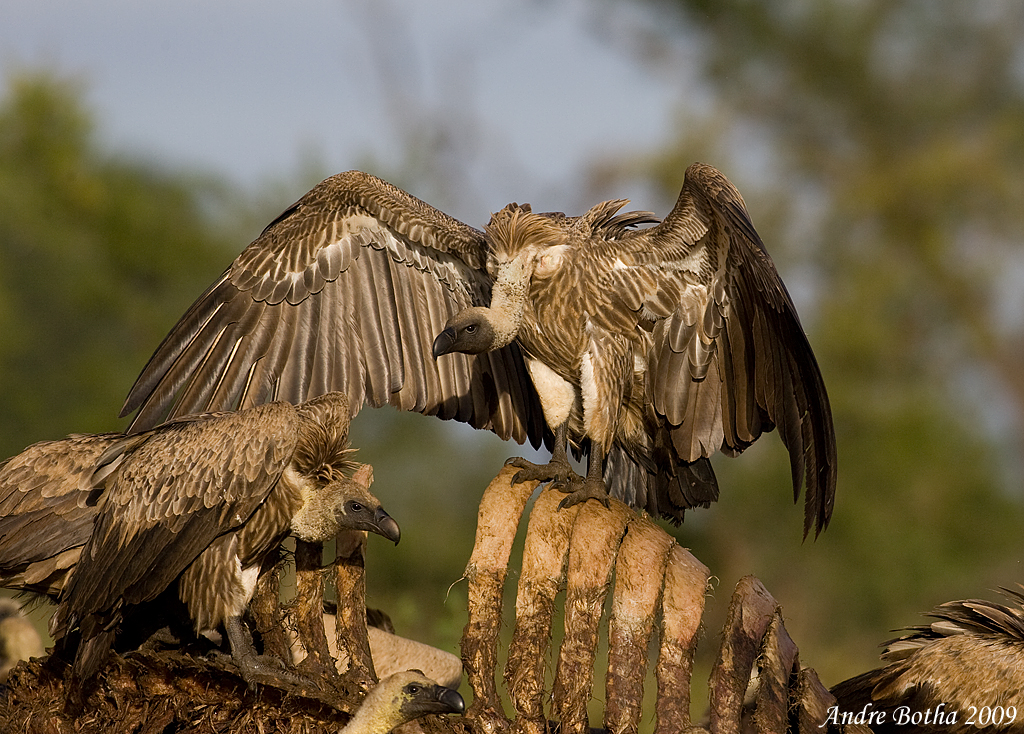
Vultures are under extreme pressure from a range of human activities. Drastic and widespread vulture population declines in recent years in Asia and Africa are reflected by the IUCN Red List status: the majority of species of Old World Vultures are now considered ‘Critically Endangered’.
Création du Groupe de travail
En 2011, la dixième réunion de la Conférence des Parties à la CMS (COP10) a adopté la résolution 10.26 Réduire le risque d'empoisonnement des oiseaux migrateurs. Celle-ci appelle les Parties à la Convention, les États de l’aire de répartition non-Parties et les autres acteurs, y compris les organisations non gouvernementales, à entreprendre des activités de coopération pour lutter contre l’empoisonnement des oiseaux migrateurs et pour établir un groupe de travail sous l’égide du Conseil scientifique.
CMS COP12 (2017) first adopted Resolution 12.15 Aquatic Wild Meat, which established the thematic Working Group on Aquatic Wild Meat to provide expert advice to CMS Parties, to collaborate with relevant organizations such as the International Whaling Commission (IWC), and to coordinate science and policy participation with the relevant Memoranda of Understanding and Agreements concluded under CMS.
Création du Groupe de travail
La cinquième réunion de la Conférence des Parties à la CMS (COP5, 1997) a adopté une recommandation appelant à la création d’un groupe de travail restreint pour guider les décisions du Conseil scientifique sur le changement climatique. La recommandation 5.5 a fourni la base du mandat de la CMS concernant le changement climatique, développé ultérieurement par les résolutions 8.13, 9.7, 10.19 et 12.21 (Rev.COP15).
Connectivity is a key word of the Convention on the Conservation of Migratory Species of Wild Animals (CMS), the only global legal instrument devoted to the conservation of migratory animals. Recently, increasing attention and importance are being given to the role that connectivity plays in nature conservation, and in the face of both the ongoing biodiversity crisis and escalating climate-driven ecological catastrophes, the role it plays in the protection and retention of ecological integrity.

Création du Groupe de travail
La neuvième réunion de la Conférence des Parties à la CMS (COP9) a adopté deux résolutions appelant à un examen pour la mise en place de cadres/accords appropriés pour la conservation des espèces migratrices au cours de la période intersession précédant la COP10.
Article VI, paragraph 1 of the Convention requests the Secretariat to keep an up-to-date list of the Range States of migratory species listed in Appendices I and II, using information received from the Parties. A Working Group on maintaining lists of species listed in CMS Appendices was established by the Seventh Meeting of the Sessional Committee of the Scientific Council (ScC-SC7), held in September 2024, to support the Secretariat in the implementation of Article VI, paragraph 1 of the Convention.
The loss and degradation of habitats is one of the key threats to migratory species, many of which are shared between humans and wildlife, including CMS-listed mammals and birds.
Resolution 12.27 (Rev.COP15)Taxonomy and Nomenclature instructs the Scientific Council to review, at its last meeting before each meeting of the Conference of Parties, the online versions of the fish, bird and marine mammal references for the species listed in the Appendices, and to make recommendations as to whether the name of any listed species should be updated.
Concluded Working Groups
An Intersessional Working Group has been established by the COP to consider the Future Shape of CMS. The Group is chaired by Switzerland. Australia is Vice-Chair.
Parties, non-Parties and organizations wishing to know more about the work of the group should contact the appropriate regional members.
The membership was elected at COP9 in Rome.
Future Shape Process - First Step
Création du Groupe de travail
Lors de la 10ème réunion de la Conférence des Parties de la CMS (COP10) à Bergen, il a été décidé dans la Résolution 10.5 de créer un Groupe de travail chargé de rédiger le nouveau Plan stratégique pour les espèces migratrices pour la période 2015-2023, qui serait soumis à la COP11 de la CMS pour examen et adoption.
En adoptant le Plan stratégique pour les espèces migratrices 2015-2023, la COP11 a reconnu la nécessité de davantage de travail intersession afin de renforcer l’ensemble des documents soutenant la mise en œuvre du Plan, dont :