Building Fieldwork Capacity in Africa to Conserve the Endangered Egyptian Vulture
Abu Dhabi, 01 May 2014 – The Coordinating Unit of the Raptors MoU is pleased to announce the successful completion of a Fieldwork Capacity Building Project to support the conservation of migratory Egyptian Vultures of the Balkan Region on their wintering grounds in Ethiopia, Sudan and Chad.
The year-long project was led by the Bulgarian Society for Protection of Birds (BSPB) - BirdLife Bulgaria. It formed a complementary component of BSPB’s ongoing ‘The Return of the Neophron’ initiative, which aims to prevent the extinction of the rapidly declining population of Egyptian Vultures in the Balkan Region. ‘The Return of the Neophron’ is supported by European Union Life+ funding and is focused on conservation actions in the Balkans. Partnering with the Coordinating Unit of the Raptors MoU enabled practical conservation activities to be carried out outside of Europe.
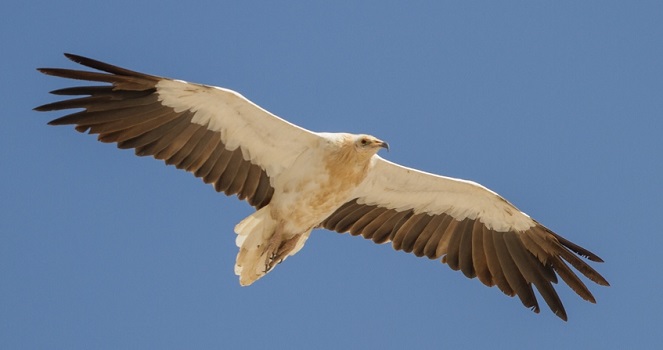
The Egyptian Vulture (Neophron percnopterus) is a large migratory bird of prey classified as Globally Endangered by IUCN and listed in Category 1 of the CMS Raptors MoU. Its populations have suffered rapid declines, especially in the Balkans where the number of breeding pairs has decreased by over 80% in the last 30 years. The Eurasian population is migratory, spending the winter (from October to March) in Africa. Research by BSPB has shown that each year fewer and fewer birds have been returning to the Balkans from their wintering grounds, which suggests high mortality along the flyway or in their wintering areas, probably due to threats such as poisoning, electrocution and direct persecution.
The Fieldwork Capacity Building Project was focused on training a small number of local African ornithologists to undertake surveys of Egyptian Vultures in their own countries. The training was successfully completed at a Workshop in January 2013 held in Ethiopia. The trained personnel then conducted surveys from January to March 2013 in Chad, Ethiopia and Sudan. Finally, a group of African and European ornithologists participated in a Field Training Seminar hosted by BSPB in Bulgaria during July 2013. Participants had the opportunity to learn about and experience practical research activities and conservation approaches. They also visited the remaining core population areas of the Egyptian Vulture in the Balkans to observe birds in the field.
Besides effectively enhancing capacity of African ornithologists to work with the species, the project also contributed significantly to assessment of the population and its key threats in the little known wintering areas of the species.
As the most threatened species covered by the Raptors MoU, the Egyptian Vulture is considered a flagship. Accordingly, further collaboration is being planned with BSPB to maximize synergies and the effective deployment of each organisation’s resources.
Further information on the Fieldwork Capacity Building Project and the Final Summary Report are available on the Raptors MoU website here.
Further information on ‘The return of the Neophron’ Project is available at www.lifeneophron.eu.