
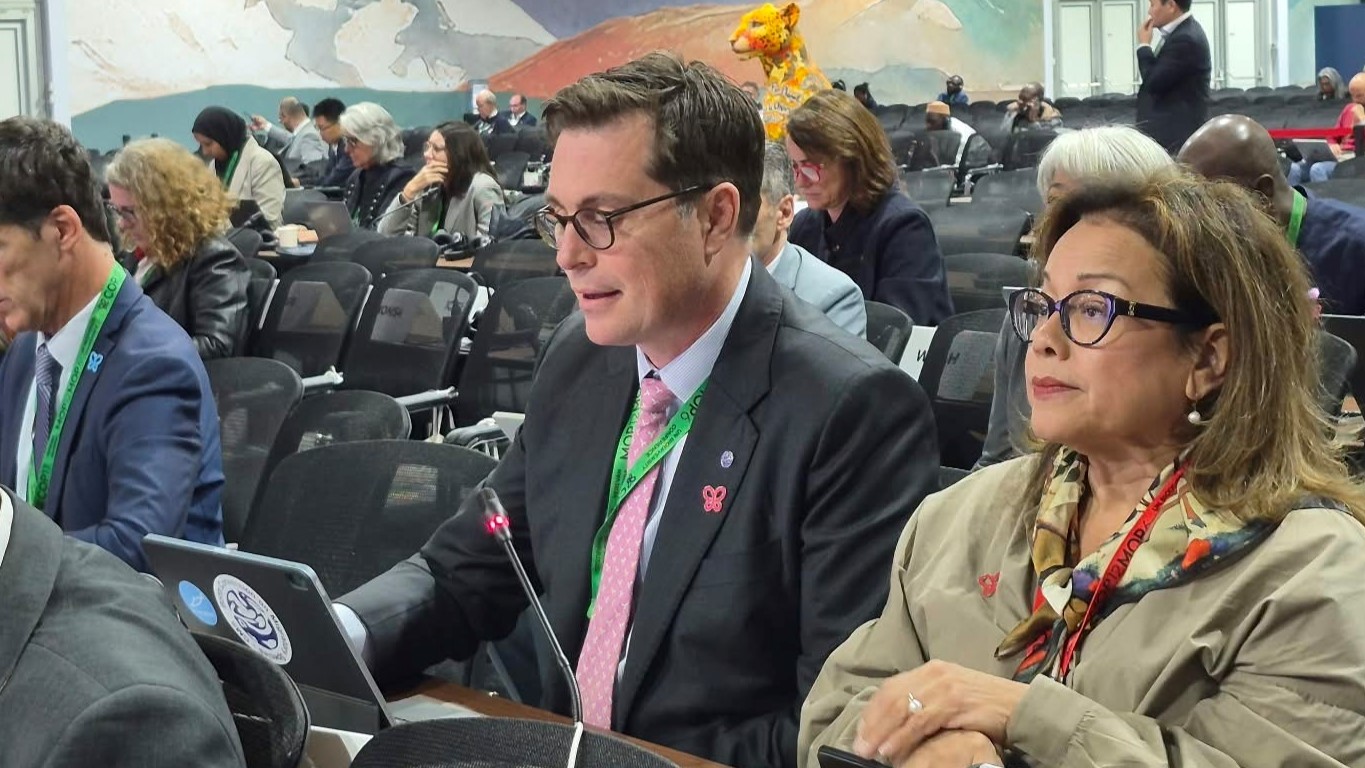
Statement of CMS Executive Secretary Andy Raine at the High-Level Segment of CBD COP17
Statement by the Executive Secretary of the Convention on the Conservation of Migratory Species of Wild Animals (CMS) at the High-Level Segment of the Seventeenth Meeting of the Conference of the Parties to the Convention on Biological Diversity (CBD COP17)
28 October 2026, Yerevan, Armenia
Excellencies, Distinguished Delegates, Ladies and Gentlemen,
As we gather to accelerate implementation of the Kunming-Montreal Global Biodiversity Framework (KMGBF), CMS is proud to contribute to the collective effort to turn global commitments into coordinated action.
Migratory species connect ecosystems, countries, economies, health systems, and communities. Their conservation therefore requires exactly the type of integrated approach envisioned under the KMGBF. CMS – and its family of instruments - has long demonstrated that effective biodiversity conservation depends on cooperation across borders, across sectors, and across all levels of governance.
CMS helps deliver multiple targets in the KMGBF, and especially those related to ecosystem restoration, spatial planning, and areas-based conservation. It provides a global platform for the conservation and sustainable use of migratory animals and their habitats. It brings together States through which migratory animals pass and lays out the legal foundation for internationally coordinated conservation measures.
One of the significant contributions CMS is making to KMGBF implementation is fostering partnerships that bridge policy, science, and practice. For example, through the Global Partnership on Ecological Connectivity (GPEC), launched under CMS, various stakeholders work together to scale up action to maintain, restore and enhance ecological connectivity. GPEC provides a platform for knowledge exchange, capacity-building, policy coherence and coordinated implementation. Other initiatives that are supporting KMGBF implementation include the Energy Task Force, the Joint CITES-CMS African Carnivores Initiative, the Central Asian Mammals Initiative, and the Atlas for the Americas Flyways, to name just a few.
CMS is also strengthening coordination and delivering tools and implementation action to address key drivers of biodiversity loss. Its instruments and initiatives target key threats to migratory species, including habitat loss, invasive species, climate change, pollution, and illegal domestic trade. The Global Initiative on the Taking of Migratory Species (GTI), for example, is improving data, strengthening legal frameworks, promoting community engagement and supporting cross-sectoral collaboration.
CMS is deeply committed to strengthening collaboration and synergies across the multilateral system itself. Delivering the KMGBF requires us to move beyond institutional silos and strengthen cooperation across the United Nations and with other relevant international organizations, development agencies, financial institutions, scientific bodies and civil society partners. Through its active engagement in the Liaison Group of Biodiversity-related Conventions (BLG), CMS works closely with the other biodiversity conventions to align efforts, share expertise, and support coherent implementation of global biodiversity commitments. The BLG provides an important mechanism for advancing synergies among the conventions in support of the goals and targets of the KMGBF.
As we look toward reaching the 2030 targets, CMS remains committed to serving as a convening platform that connects actors, knowledge, and action. Thank you.
Related: CMS engagements at UN Biodiversity Conference CBD COP17