
Fact Sheet on Moose Migration in the Biebrza River Valley, Poland
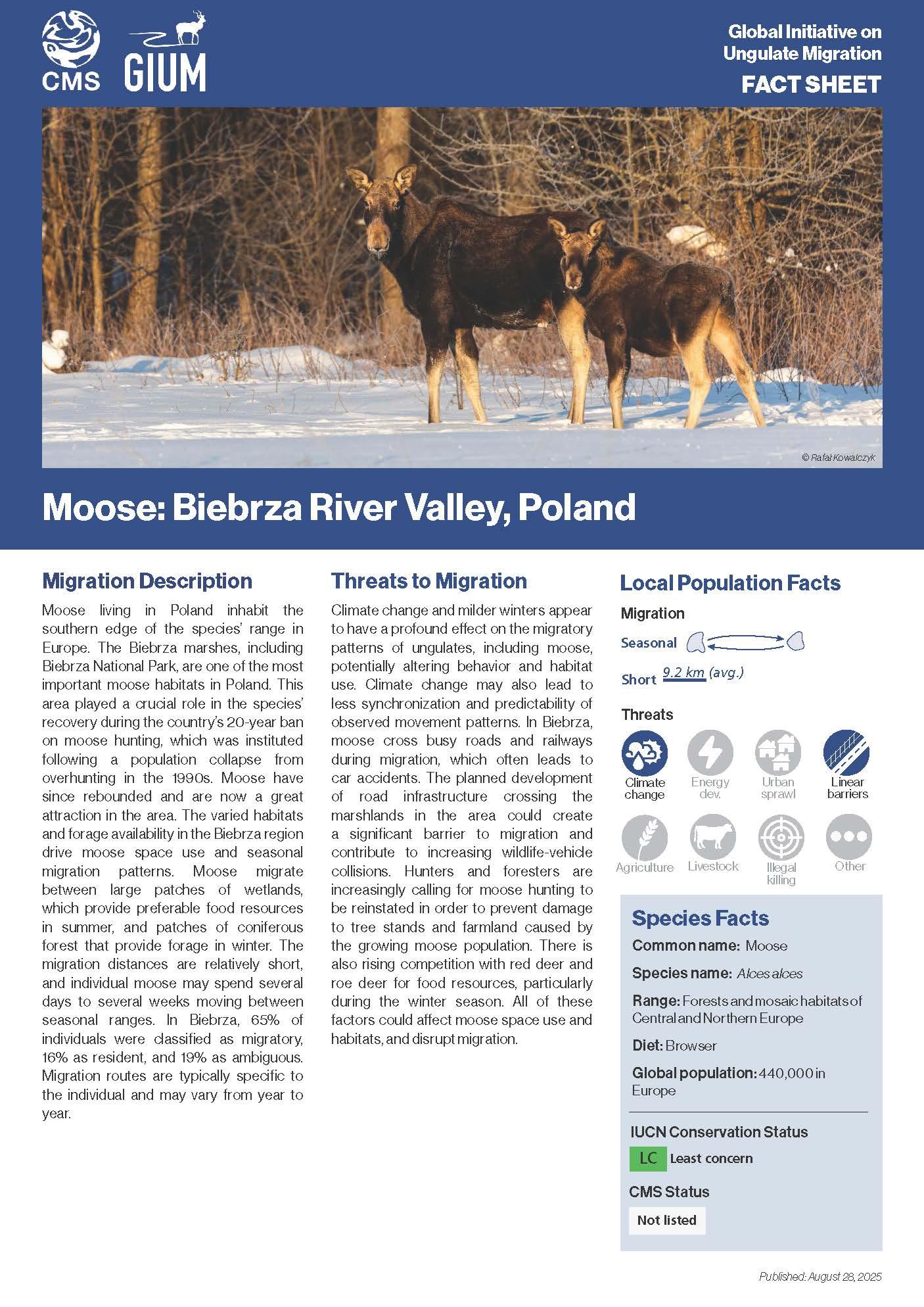
Moose living in Poland inhabit the southern edge of the species’ range in Europe. The Biebrza marshes, including Biebrza National Park, are one of the most important moose habitats in Poland. This area played a crucial role in the species’ recovery during the country’s 20-year ban on moose hunting, which was instituted following a population collapse from overhunting in the 1990s. Moose have since rebounded and are now a great attraction in the area. The varied habitats and forage availability in the Biebrza region drive moose space use and seasonal migration patterns. Moose migrate between large patches of wetlands, which provide preferable food resources in summer, and patches of coniferous forest that provide forage in winter. The migration distances are relatively short, and individual moose may spend several days to several weeks moving between seasonal ranges. In Biebrza, 65% of individuals were classified as migratory, 16% as resident, and 19% as ambiguous. Migration routes are typically specific to the individual and may vary from year to year.
| Fichier attaché | Taille |
|---|---|
| Fact Sheet on Moose Migration, Biebrza River Valley, Poland | 2.03 Mo |