
Impacts of Deep-sea Mining on Migratory Species: Review and Knowledge Gaps
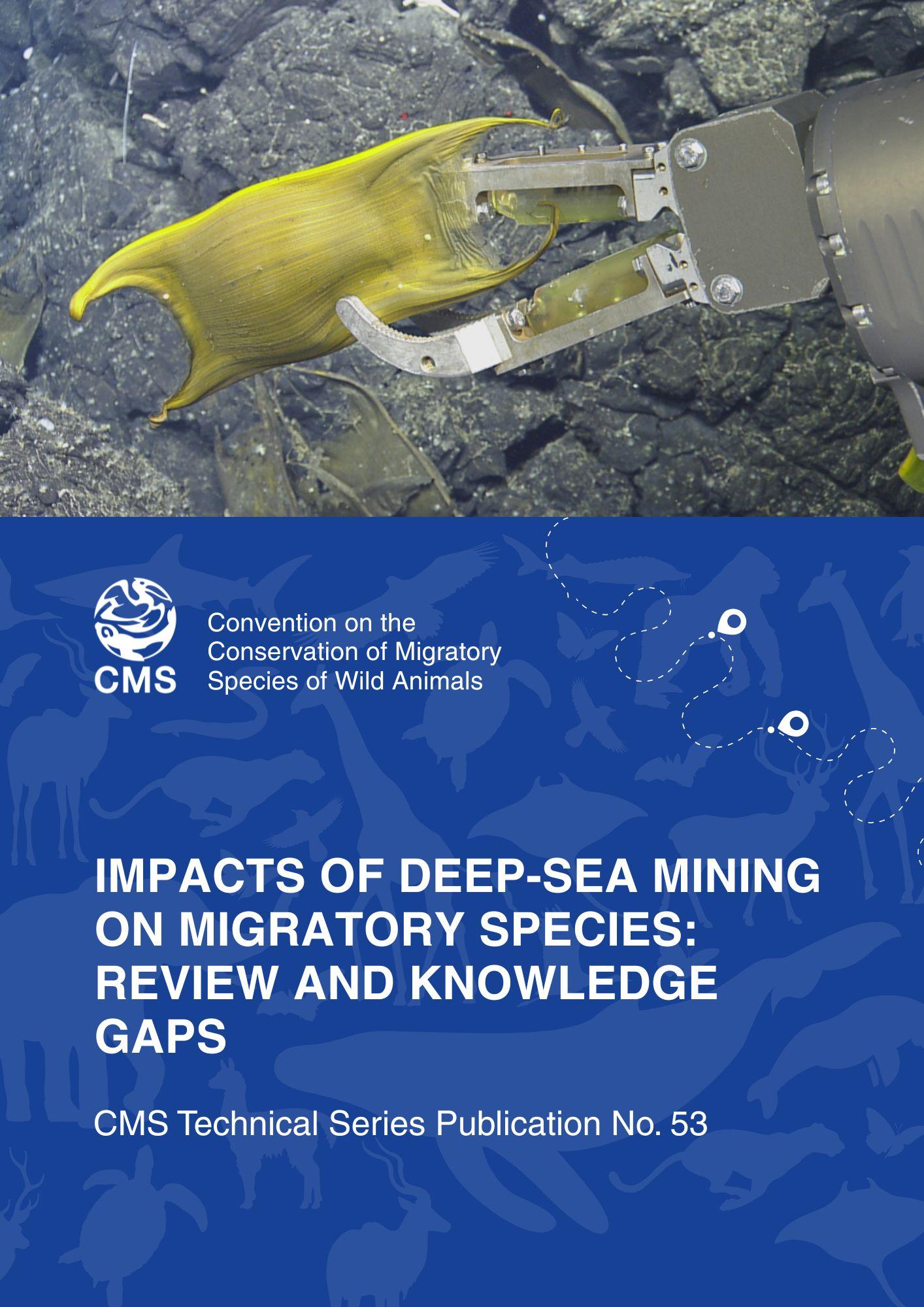
Deep-sea mining is the process of extracting ore from polymetallic sulphides, cobalt-rich crusts and polymetallic nodules, typically at depths ranging from 1,000 to 6,000 metres. Deep-sea mining is a nascent industry; it faces multiple legal, technical and environmental hurdles if it is to enter into commercial production. In areas beyond national jurisdiction (ABNJ), the industry is overseen by the International Seabed Authority (ISA), a UN entity tasked with both regulating all mineral-related activities and ensuring the protection and preservation of the marine environment from these activities.
The impacts of deep-sea mining on the marine environment are not well understood and will vary across taxonomic groups and ecosystem types. Research to date has prioritized impacts to the seafloor ecosystems directly targeted by mining interests. There has been less focus on the broader ocean environment and, in particular, the pelagic realm. This includes the impacts to highly migratory species1 that move through potential mining sites and adjacent impacted areas, that interact with prey species and habitats associated with mining sites, and that rely on acoustic and chemical cues to migrate across the ocean.
Here, we assess the current state of knowledge regarding the potential impacts of deep-sea mining on migratory species, focusing on those listed under the Convention on the Conservation of Migratory Species of Wild Animals (CMS), while also considering other
important migratory species not listed under CMS.
| Fichier attaché | Taille |
|---|---|
| Impacts of Deep-sea Mining on Migratory Species: Review and Knowledge Gaps | 15.29 Mo |