
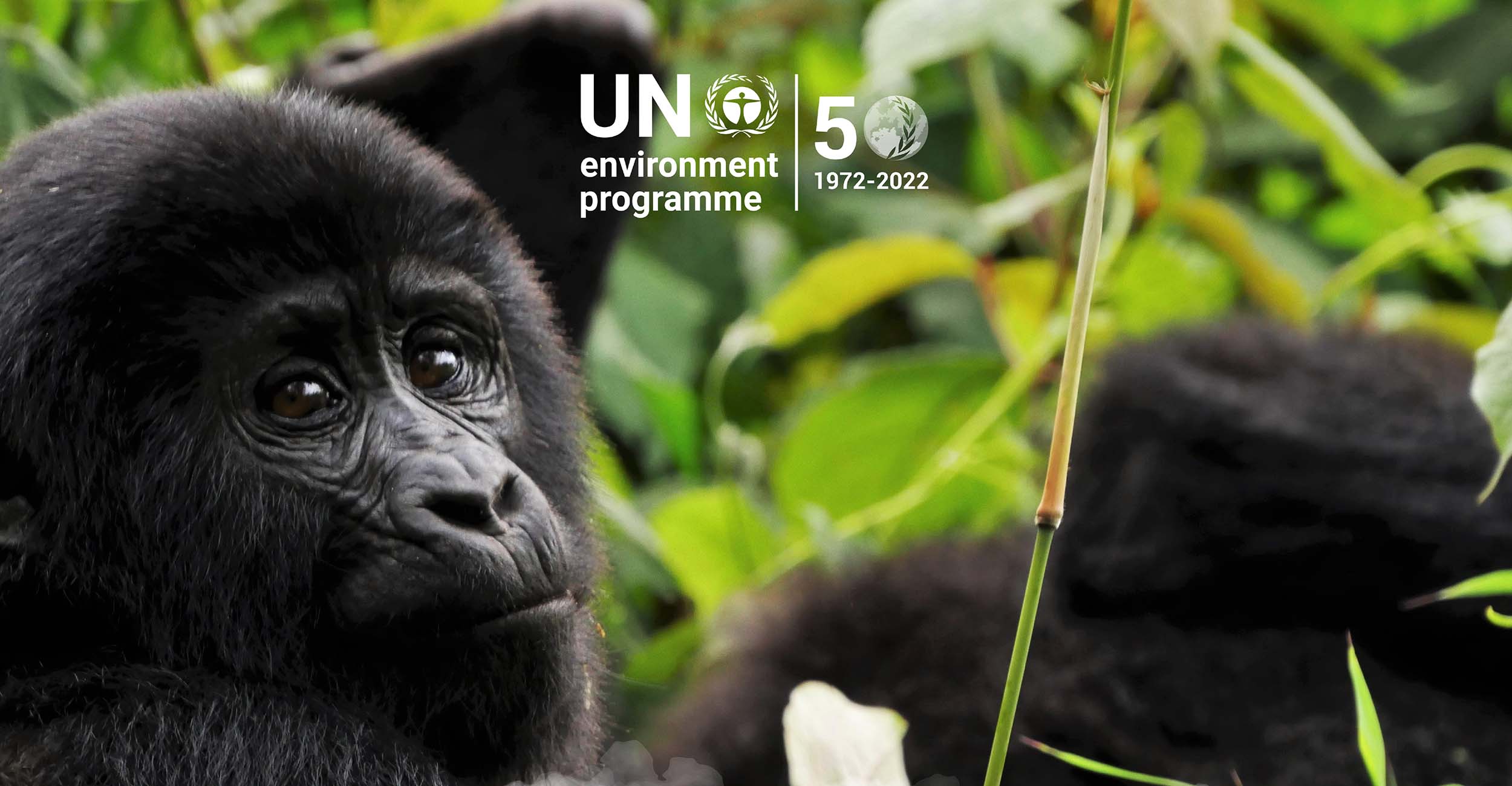
Statement by Amy Fraenkel, CMS Executive Secretary at UNEP@50 Plenary High Level Session
Excellencies,
Distinguished Delegates,
Colleagues,
Ladies and Gentlemen,
It is a honor for me to speak on behalf of the Convention on the Conservation of Migratory Species of Wild Animals (CMS) at this High-Level meeting that marks the 50th Anniversary of the United Nations Environment Programme.
UNEP@50 is a time to reflect on and celebrate 50 years of efforts all over the world to tackle pollution and the destruction of nature.
The Stockholm Conference in 1972 was one of those extraordinary moments, whose time had come. Not only did it lead to the establishment of UNEP, but to environmental laws and the creation of environmental agencies within national governments.
Yet few people in this room may know that at Stockholm, governments called for a treaty to protect migratory wildlife – which led to the adoption of CMS in 1979. The Convention has now grown to include 133 Parties, with the Kingdom of Bahrain joining on 1 March.
Today CMS provides an effective means for governments and partners to work together on the conservation of migratory species and their habitats at the transboundary, regional and international levels, and to address the threats to species protected by CMS.
Migratory species are an integral part of nature and healthy ecosystems. You cannot have ecosystems without species, and you cannot have migratory species without healthy ecosystems.
Migratory species provide important functions such as pest control, pollination and seed dispersal. They also contribute to food security, livelihoods and jobs. Some migratory species such as the Forest Elephant provide carbon sequestration worth millions of dollars.
Yet, as the IPBES Global Assessment confirmed, we are losing wild species animals at an unprecedented rate.
Perhaps not surprisingly, the two biggest threats to migratory species of wilds animals are the same as those that increase the risks of zoonotic diseases: habitat destruction and fragmentation, and overexploitation.
Migratory species are a good indicator of the state of our natural world. And unfortunately, it is not well. Despite many achievements, we continue to undervalue, and thus destroy, the nature that sustains us.
Stockholm told us what needed to be done, and it is up to us to deliver.
We look forward to continuing to work closely with UNEP, other UN entities, MEAs, and all member states and stakeholders to help address the challenging global environmental issues of our time.
Thank you!